
Building an Inclusive Workplace: A Practical Checklist for HR Leaders
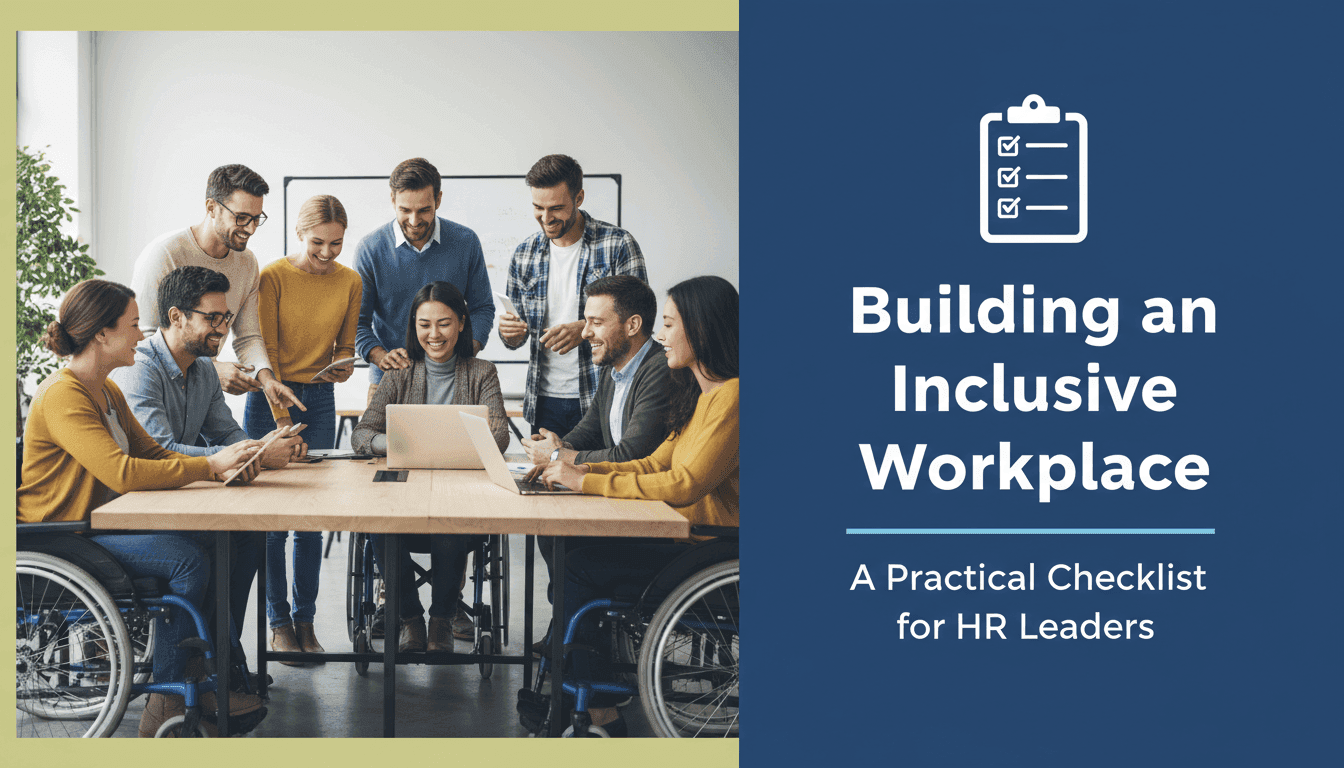
Table Of Contents
- Why Workplace Inclusion Is a Business Imperative
- The Foundation: Policies and Structural Frameworks
- Hiring for Diversity: Checklist for Equitable Recruitment
- Creating a Culture Where Everyone Belongs
- Mental Health and Psychological Safety as Inclusion Pillars
- Leadership's Role in Driving Inclusion
- Measuring Progress: Inclusion Metrics That Matter
- Common Pitfalls HR Leaders Should Avoid
- Your Inclusive Workplace Action Plan
Building an Inclusive Workplace: A Practical Checklist for HR Leaders
Inclusion is no longer a box to tick on a compliance report — it is one of the most powerful drivers of employee performance, psychological wellbeing, and organizational resilience. Research consistently shows that employees who feel genuinely included are more engaged, more innovative, and significantly less likely to leave. Yet despite growing awareness, many organizations still struggle to move beyond surface-level diversity initiatives toward workplaces where every person, regardless of background, identity, or ability, can contribute fully and feel valued.
For HR leaders, this is both the challenge and the opportunity. Building an inclusive workplace requires a deliberate, structured approach that spans recruitment, culture, leadership, and employee wellbeing — and it demands ongoing effort rather than a one-off policy update. This practical checklist is designed to help HR professionals at every stage of the inclusion journey take meaningful, evidence-based action. Whether you are laying the groundwork or refining an existing framework, the steps ahead will help you create an environment where people don't just show up — they thrive.
Why Workplace Inclusion Is a Business Imperative {#why-inclusion-matters}
The business case for inclusion has never been stronger or more clearly supported by data. Companies with highly inclusive cultures are more likely to outperform their peers in profitability, employee retention, and innovation capacity. McKinsey's research has repeatedly found that organizations in the top quartile for diversity and inclusion are significantly more likely to achieve above-average financial returns compared to industry peers.
But the case for inclusion extends well beyond the balance sheet. At its core, inclusion is about psychological safety — the assurance that employees can speak up, make mistakes, and bring their authentic selves to work without fear of judgment or retaliation. When psychological safety is high, discretionary effort increases, collaboration deepens, and talent stays longer. For organizations like those supported by iGrowFit, developing this kind of psychological capital is central to peak performance and sustainable business growth.
HR leaders who treat inclusion as a strategic priority rather than a compliance exercise are better positioned to attract top talent, reduce costly turnover, and build the kind of organizational culture that withstands economic and social disruption.
The Foundation: Policies and Structural Frameworks {#policies-and-structure}
Before culture can shift, structures must be in place. A comprehensive inclusion policy is the bedrock upon which all other initiatives are built. Without clear, written commitments, inclusion efforts tend to rely on the goodwill of individual managers rather than consistent organizational practice.
Policies and structural checklist for HR leaders:
- Develop and publish a formal Diversity, Equity, and Inclusion (DEI) policy statement that reflects genuine organizational values
- Establish clear anti-discrimination and anti-harassment policies with accessible, confidential reporting mechanisms
- Review existing HR policies (leave, flexible work, promotion criteria) through an inclusion lens to identify unintentional barriers
- Create an accessibility framework that addresses physical workspace, digital tools, and communication materials
- Ensure all HR processes are documented, transparent, and applied consistently across employee groups
- Appoint or designate an inclusion champion or committee with real authority and resources
Policies create accountability. When employees see that inclusion is written into the operational fabric of the organization — not just featured in a mission statement — trust begins to build. This trust is the currency through which psychological safety grows.
Hiring for Diversity: Checklist for Equitable Recruitment {#equitable-recruitment}
Inclusion starts before an employee walks through the door. Recruitment processes carry unconscious biases that, left unexamined, consistently favor candidates from dominant groups while disadvantaging qualified talent from underrepresented backgrounds. HR leaders must audit and redesign their hiring pipelines with equity as a deliberate design principle.
Equitable recruitment checklist:
- Audit job descriptions for exclusionary language, unnecessary requirements, and gendered or culturally specific phrasing
- Implement structured interviews with standardized, competency-based questions applied uniformly to all candidates
- Diversify sourcing channels to reach talent pools beyond the organization's existing networks
- Train interviewers and hiring managers on recognizing and mitigating unconscious bias
- Use diverse hiring panels to reduce the influence of any single perspective in candidate evaluation
- Set representation goals (not quotas) for shortlisting across key roles and levels
- Track demographic data at each stage of the hiring funnel to identify where dropout or bias is occurring
Equitable hiring is not about lowering standards — it is about removing the unintentional barriers that prevent high-potential individuals from being seen and selected fairly. Organizations that get this right consistently report a broader and stronger talent pipeline.
Creating a Culture Where Everyone Belongs {#inclusive-culture}
Policies set the rules; culture determines how people actually experience those rules day to day. An inclusive culture is one where difference is not merely tolerated but genuinely celebrated, where diverse voices are actively sought in decision-making, and where belonging is felt at the team level — not just communicated from the top.
Culture building is gradual, relational work. It happens in one-on-ones, in how meetings are facilitated, in whether quieter voices are invited in, and in how conflict is handled. HR leaders play a critical role in modeling and reinforcing inclusive behaviors by equipping managers with the skills and language to lead inclusively.
Culture checklist for HR leaders:
- Launch regular, structured employee listening sessions (beyond annual surveys) to hear diverse perspectives
- Establish Employee Resource Groups (ERGs) for underrepresented communities and provide them with visibility, resources, and leadership access
- Incorporate inclusive behaviors as observable, measurable criteria in performance reviews
- Train all managers in inclusive leadership skills, including active listening, allyship, and culturally responsive communication
- Celebrate cultural observances and milestones across the employee calendar meaningfully, not tokenistically
- Regularly assess team-level inclusion through pulse surveys and act visibly on findings
Culture is shaped by what leaders consistently reward, model, and tolerate. HR's role is to ensure that inclusive behavior is recognized and that exclusionary behavior carries real consequences.
Mental Health and Psychological Safety as Inclusion Pillars {#mental-health-inclusion}
True inclusion cannot exist without psychological safety. Employees from marginalized or underrepresented groups often carry an additional cognitive and emotional burden at work — managing perceptions, navigating microaggressions, and code-switching between their authentic selves and the dominant workplace culture. This invisible labor is exhausting and, over time, significantly impacts mental health, engagement, and performance.
HR leaders who integrate mental health support into their inclusion strategy create a more holistic and effective approach. An Employee Assistance Program (EAP) is one of the most impactful tools available. Organizations supported by iGrowFit's EAP services gain access to multi-disciplinary teams of psychologists, coaches, and counselors who help employees build psychological capital — the resilience, optimism, efficacy, and hope needed to perform at their best regardless of background or circumstance.
Mental health and psychological safety checklist:
- Ensure EAP services are accessible, culturally competent, and available in relevant languages
- Train managers to recognize signs of psychological distress and refer employees to appropriate support confidently
- Normalize mental health conversations through storytelling, leadership disclosure, and awareness campaigns
- Design work systems that prevent burnout — reviewing workloads, deadlines, and always-on communication expectations
- Create formal channels for employees to raise inclusion concerns without fear of retaliation
- Assess whether underrepresented employee groups report lower wellbeing or belonging scores and investigate root causes
When employees feel psychologically safe, they are more likely to speak up, collaborate, take creative risks, and remain committed to the organization — all of which directly support business performance.
Leadership's Role in Driving Inclusion {#leadership-role}
Inclusion initiatives live or die based on leadership commitment. HR can design excellent frameworks, but without visible, consistent sponsorship from senior leaders, inclusion efforts are perceived as HR's project rather than organizational strategy. Leaders set the tone — their behavior signals what is truly valued.
Inclusive leadership is a learnable skill set. It encompasses self-awareness about one's own biases, the ability to facilitate equitable participation, comfort with vulnerability, and the willingness to advocate for others. Leadership development programs that embed inclusion competencies alongside traditional performance skills are far more effective than standalone diversity workshops.
Leadership inclusion checklist:
- Include inclusion competencies in leadership capability frameworks and succession planning criteria
- Hold leaders accountable for inclusion outcomes using data (team turnover rates, engagement scores, representation in promotions)
- Provide senior leaders with coaching and development focused on inclusive leadership behaviors
- Encourage leaders to actively sponsor underrepresented talent, not just mentor them
- Create forums where leaders can engage honestly with inclusion challenges without defensiveness
- Publicly recognize leaders who demonstrate exemplary inclusive behaviors
Measuring Progress: Inclusion Metrics That Matter {#measuring-inclusion}
What gets measured gets managed. Without clear metrics, inclusion efforts remain aspirational rather than accountable. HR leaders need a data dashboard that tracks not just diversity numbers but the quality of inclusion experience across employee groups.
Effective measurement combines quantitative data (representation rates, pay equity analysis, promotion rates by demographic group) with qualitative insights (belonging scores, psychological safety surveys, exit interview themes). The goal is to identify where inclusion gaps exist, understand why they persist, and track whether interventions are working over time.
Key inclusion metrics to track:
- Representation data at each organizational level by gender, ethnicity, age, disability, and other relevant dimensions
- Belonging and inclusion scores from regular pulse surveys, disaggregated by employee group
- Pay equity analysis across demographic categories
- Promotion and advancement rates compared across employee groups
- Attrition rates and exit interview themes analyzed through an inclusion lens
- Utilization and satisfaction rates of EAP and mental health resources
- Completion and impact rates for inclusion-related training programs
Transparency in sharing these metrics — both the wins and the gaps — builds organizational trust and signals that inclusion is being taken seriously at every level.
Common Pitfalls HR Leaders Should Avoid {#common-pitfalls}
Even well-intentioned inclusion efforts can fall short when common mistakes go unaddressed. Recognizing these pitfalls early can save organizations significant time, resources, and reputational risk.
Treating inclusion as a one-time initiative is perhaps the most pervasive error. Inclusion requires sustained, systemic effort — a single workshop or awareness month does not shift culture. Similarly, focusing exclusively on diversity numbers without addressing the lived experience of belonging misses the point entirely. Representation without inclusion creates a revolving door, where diverse talent is recruited but quickly lost due to a culture that does not support them.
Another common pitfall is placing the burden of inclusion on underrepresented employees themselves — asking them to educate colleagues, lead ERGs without adequate support, or serve as diversity tokens in meetings and panels. This is exhausting and counterproductive. Inclusion is the responsibility of the entire organization, particularly those with privilege and positional power.
Finally, ignoring intersectionality — the way that multiple identities interact to create unique experiences of inclusion and exclusion — leads to incomplete strategies. An employee who is both a woman and a person of color, for example, may face compounding barriers that single-axis approaches fail to capture.
Your Inclusive Workplace Action Plan {#action-plan}
Building an inclusive workplace is not a destination — it is an ongoing commitment to continuous learning, honest assessment, and meaningful action. For HR leaders, the path forward requires both strategic vision and practical execution across every stage of the employee lifecycle.
Start by auditing your current state honestly. Review your policies, hiring data, engagement scores, and leadership behaviors through an inclusion lens. Identify your biggest gaps and prioritize two or three high-impact actions to begin immediately. Build your inclusion infrastructure — the policies, data systems, and leadership accountability mechanisms — before scaling culture programs. And invest in the psychological wellbeing of your workforce as a non-negotiable foundation for everything else.
The organizations that get inclusion right are not those with the most sophisticated frameworks on paper — they are the ones where employees at every level feel genuinely seen, supported, and empowered to do their best work. That is a goal worth pursuing with both urgency and care.
Building Inclusion That Lasts
An inclusive workplace is ultimately about people — creating the conditions where every employee, regardless of who they are or where they come from, can contribute fully and feel that their contribution matters. For HR leaders, this means weaving inclusion into the daily fabric of organizational life: in how decisions are made, how leaders behave, how support is provided, and how success is measured.
At iGrowFit, we understand that developing people — their resilience, mindset, and sense of belonging — is the foundation of peak organizational performance. Our evidence-based EAP solutions and holistic ConPACT framework are designed to help businesses create environments where people genuinely thrive, not just survive. If you are ready to take your inclusion strategy to the next level, we are here to help you build it from the inside out.
Ready to Build a More Inclusive, High-Performing Workplace?
Let's talk about how iGrowFit's Employee Assistance Program and organizational development solutions can support your inclusion goals — with evidence-based approaches trusted by over 450 leading organizations.
💬 Chat with Our Team on WhatsApp
Our team of psychologists, coaches, and consultants is ready to help you design bespoke solutions that align your people strategy with real business outcomes.