How to Set Up an EAP Program: A Step-by-Step Guide for HR Teams
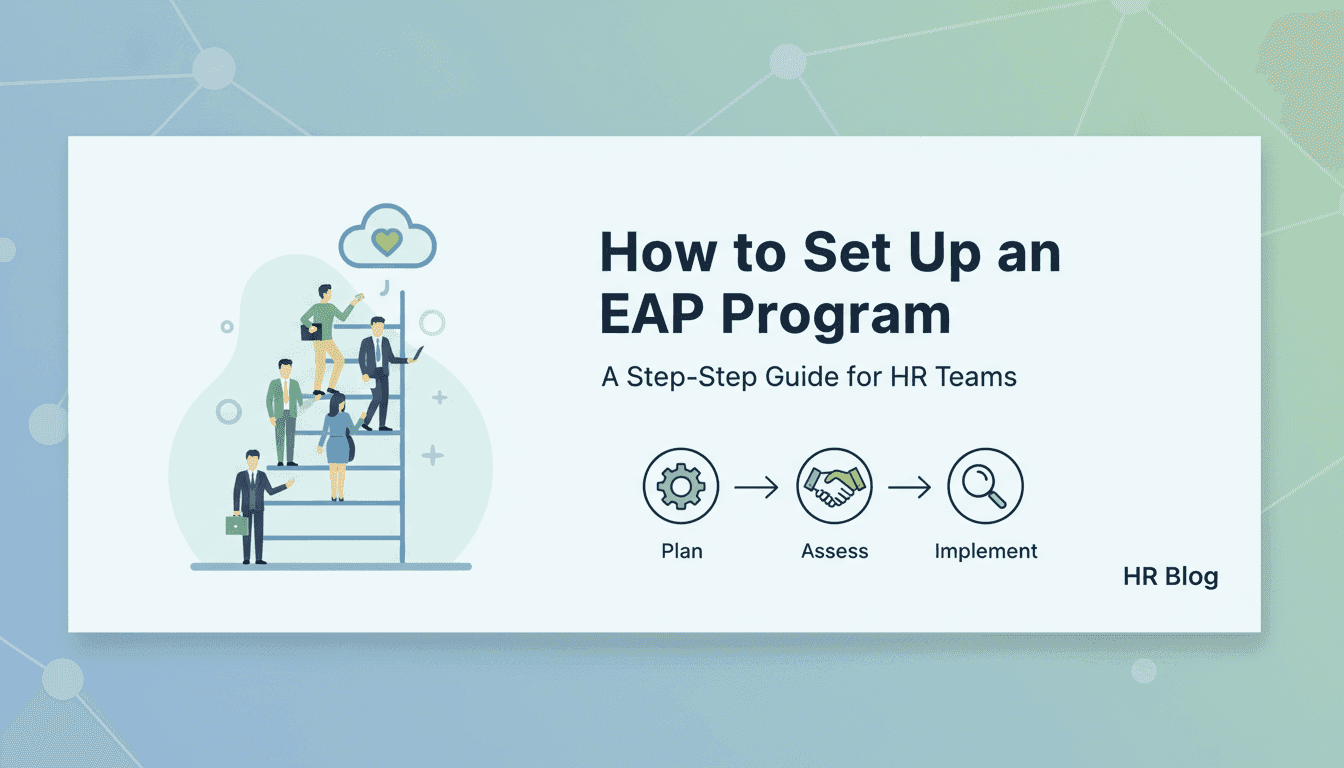
Table Of Contents
- Understanding Employee Assistance Programs
- Why Your Organization Needs an EAP
- Step 1: Assess Your Organization's Needs
- Step 2: Secure Leadership Buy-In and Budget
- Step 3: Define Your EAP Scope and Services
- Step 4: Select the Right EAP Provider
- Step 5: Develop an Implementation Plan
- Step 6: Launch Your EAP with Strategic Communication
- Step 7: Monitor, Measure, and Optimize
- Common Challenges and How to Overcome Them
- Building a Culture That Supports EAP Success
Employee wellbeing has shifted from a nice-to-have benefit to a strategic business imperative. As HR leaders navigate increasing mental health challenges, workplace stress, and the evolving expectations of a multi-generational workforce, Employee Assistance Programs (EAPs) have emerged as essential tools for supporting both people and performance.
Yet despite their proven value, many HR teams struggle with where to begin when setting up an EAP program. The process involves more than simply selecting a vendor. It requires careful needs assessment, stakeholder alignment, thoughtful program design, and sustained effort to drive adoption and measure impact.
This comprehensive guide walks you through each critical step of establishing an effective EAP program, from initial planning through launch and optimization. Whether you're implementing your first EAP or revitalizing an underutilized program, you'll find practical frameworks and actionable insights to help your organization develop a solution that truly supports employee wellbeing while advancing business objectives.
7-Step Guide to Setting Up Your EAP Program
A comprehensive roadmap for HR teams to implement an effective Employee Assistance Program
Why EAPs Matter
Implementation Roadmap
Assess Your Organization's Needs
Analyze workforce demographics, existing benefits gaps, and gather stakeholder input to understand unique organizational requirements
Secure Leadership Buy-In and Budget
Build a data-driven business case connecting EAP investment to measurable outcomes like reduced turnover and improved productivity
Define Your EAP Scope and Services
Determine core services including counseling, crisis intervention, work-life support, and manager consultation aligned with organizational priorities
Select the Right EAP Provider
Evaluate clinical quality, service breadth, implementation support, technology platform, and measurement capabilities when choosing partners
Develop an Implementation Plan
Create a 6-12 week timeline covering contract finalization, governance setup, communication strategy, and manager training programs
Launch with Strategic Communication
Deploy multi-channel campaigns that build awareness, address confidentiality concerns, and normalize help-seeking behavior across your workforce
Monitor, Measure, and Optimize
Track utilization metrics, satisfaction scores, and business impact through quarterly reviews and continuous program refinement
Core EAP Services to Consider
Keys to EAP Success
Implementation Timeline: Allow 6-12 weeks from provider selection to launch for optimal results
Investment Range: $12-100+ per employee annually depending on program comprehensiveness
Understanding Employee Assistance Programs
An Employee Assistance Program is a confidential, employer-sponsored benefit designed to help employees address personal and professional challenges that may impact their wellbeing, job performance, and quality of life. Modern EAPs extend far beyond traditional counseling services to encompass a holistic approach to employee support.
Today's comprehensive EAP solutions typically include mental health counseling, work-life balance support, financial and legal consultation, crisis intervention, and manager consultation services. The most effective programs integrate these services within a broader organizational development strategy that aligns human capital with business goals.
At their core, EAPs serve a dual purpose. They provide immediate support for employees facing difficulties, while simultaneously building the psychological capital and resilience that enable sustained performance. This dual focus on intervention and prevention distinguishes truly strategic EAPs from basic counseling referral services.
Why Your Organization Needs an EAP
The business case for Employee Assistance Programs is supported by substantial evidence. Organizations with well-implemented EAPs report measurable improvements across multiple dimensions of organizational health.
Research consistently demonstrates that EAPs deliver strong return on investment through reduced absenteeism, decreased turnover, improved productivity, and lower healthcare costs. For every dollar invested in quality EAP services, organizations typically see returns ranging from $3 to $10, depending on utilization rates and program design.
Beyond financial metrics, EAPs address critical workforce challenges that can't be captured in spreadsheets alone. They provide a safety net during personal crises, reduce stigma around mental health, demonstrate genuine organizational care, and create pathways for early intervention before small issues escalate into major problems. In an era where talent attraction and retention depend heavily on employee experience, a robust EAP signals that your organization values people as whole human beings, not just productive resources.
Step 1: Assess Your Organization's Needs
Effective EAP implementation begins with understanding your unique organizational context, workforce characteristics, and existing support infrastructure. This foundational assessment shapes every subsequent decision about program design and provider selection.
Start by analyzing your workforce demographics and composition. Consider factors such as age distribution, geographic location, work arrangements (remote, hybrid, on-site), cultural diversity, and family status. Each of these variables influences what services will be most valuable and how employees prefer to access support.
Next, conduct a comprehensive review of your current employee support landscape:
- Existing mental health and wellness benefits
- Current utilization rates of available resources
- Gaps in support for specific employee populations
- Common presenting issues from HR cases or exit interviews
- Feedback from employee surveys about unmet needs
- Workers' compensation and disability claim patterns
Gather input directly from stakeholders across your organization. Interview HR team members, managers, employee resource group leaders, and a representative sample of employees at different levels. Their perspectives will reveal both obvious gaps and hidden opportunities that data alone might miss.
Finally, examine your organizational goals and challenges. Are you experiencing high turnover in certain departments? Struggling with burnout in particular roles? Navigating organizational change? Your EAP should be designed to support both individual employees and broader business objectives.
Step 2: Secure Leadership Buy-In and Budget
Without executive support and adequate funding, even the best-designed EAP will struggle to achieve its potential. Building a compelling business case requires translating employee wellbeing into language that resonates with organizational leaders.
Develop a data-driven proposal that connects EAP investment to measurable business outcomes. Calculate the current costs of employee challenges such as turnover expenses (typically 50-200% of annual salary), absenteeism and presenteeism losses, healthcare cost trends, and workers' compensation claims. Then present evidence-based projections of how an EAP could mitigate these costs.
Your business case should address both defensive and offensive value propositions. Defensively, EAPs reduce risk and minimize costs associated with employee distress. Offensively, they enhance organizational capability by developing psychological capital, improving engagement, and strengthening your employer brand.
When presenting budget requirements, provide options at different investment levels with clear tradeoffs. A basic EAP might cost $12-40 per employee annually, while comprehensive programs with robust services and high-touch implementation support range from $40-100+ per employee. Frame these costs against the potential savings and emphasize that utilization rates (and therefore ROI) depend heavily on implementation quality, not just program availability.
Secure commitment not just for the initial setup, but for ongoing program support including communication campaigns, manager training, and program evaluation. Many organizations underinvest in these critical success factors, resulting in low awareness and underutilization.
Step 3: Define Your EAP Scope and Services
With needs assessed and budget secured, you can now define what your EAP will actually offer. This step requires balancing comprehensiveness with focus, ensuring you provide meaningful depth rather than superficial breadth.
Core EAP services typically include:
- Confidential counseling: Short-term therapy for mental health, relationship, and personal issues (typically 3-8 sessions per issue per year)
- Crisis intervention: 24/7 access to immediate support during emergencies
- Work-life services: Assistance with childcare, eldercare, legal issues, financial concerns, and daily life challenges
- Manager consultation: Guidance for leaders navigating employee performance and wellbeing concerns
- Referral coordination: Connections to specialized long-term care when needs exceed EAP scope
Consider enhanced services that align with your organizational priorities:
- Specialized support for critical incidents and organizational trauma
- Coaching services for leadership development and career transitions
- Training programs on resilience, stress management, and psychological wellbeing
- Digital platforms with self-service resources and virtual counseling options
- Organizational consultation on workplace culture and systemic issues
Define access modalities based on your workforce preferences and circumstances. Most effective programs offer multiple pathways including phone support, video counseling, in-person sessions, text-based chat, and self-service digital resources. The key is meeting employees where they are, both literally and in terms of their comfort with different support formats.
Establish clear service parameters such as session limits per issue, eligibility (employees only versus employees plus household members), geographic coverage for distributed workforces, and language accessibility for diverse populations.
Step 4: Select the Right EAP Provider
Choosing an EAP provider is one of your most consequential decisions. The right partner brings not just services, but expertise, reliability, and alignment with your organizational values and culture.
Begin your selection process by developing evaluation criteria that reflect your priorities. Essential considerations include:
Clinical quality and credentialing: Verify that counselors hold appropriate licenses and credentials. Ask about provider networks, clinician-to-member ratios, average wait times for appointments, and quality assurance processes. The best EAP providers maintain rigorous standards for their clinical networks and continuously monitor service quality.
Service breadth and depth: Assess whether the provider can deliver all services within your defined scope. Examine their capability in specialized areas that matter to your workforce, such as trauma support, multicultural competence, LGBTQ+ affirmative care, or specific clinical specializations.
Implementation support: Look beyond the service catalog to understand how the provider will support your launch and ongoing success. Top-tier providers offer strategic planning assistance, customized communication campaigns, manager training, utilization analysis, and continuous optimization support.
Technology and user experience: Evaluate the digital experience through employee and manager lenses. Is the platform intuitive? Can employees easily access services through their preferred channels? Does the technology integrate with your existing HR systems?
Measurement and reporting: Determine what data and insights the provider will deliver. Look for utilization metrics, outcome measures, trend analysis, and actionable recommendations, all presented in formats that respect confidentiality while providing meaningful visibility.
Request proposals from multiple providers and conduct thorough due diligence. Check references, specifically asking about implementation experience, clinical quality, responsiveness to issues, and measurable results. When possible, speak with organizations similar to yours in size, industry, and workforce composition.
Providers like iGrowFit bring distinctive value through their comprehensive ConPACT framework, which integrates consultancy, profiling, assessments, coaching, and training into a holistic approach. With over 700 completed projects and experience supporting more than 75,000 employees across Fortune 500 companies and SMEs, established providers offer both proven methodologies and the organizational development expertise to align your EAP with broader business objectives.
Step 5: Develop an Implementation Plan
Once you've selected your provider, shift focus to implementation planning. A detailed project plan with clear timelines, responsibilities, and milestones keeps your launch on track and ensures nothing falls through the cracks.
Your implementation plan should address these critical workstreams:
1. Contract finalization and administrative setup – Negotiate service agreements, establish data sharing and privacy protocols, determine billing and eligibility management processes, and set up technical integrations with your HRIS or benefits platforms. This typically requires 2-4 weeks depending on organizational complexity.
2. Governance and internal team structure – Designate an internal EAP program champion (often an HR business partner or wellbeing manager) who will serve as the primary liaison with your provider. Establish a cross-functional implementation team including HR, communications, IT, legal, and leadership representatives. Define decision-making authority and meeting cadence.
3. Communication strategy development – Work with your provider to create a multi-channel communication plan that builds awareness, explains services, addresses confidentiality concerns, and drives utilization. Plan for launch communications plus ongoing touchpoints throughout the year. Effective campaigns use varied messages and channels to reach different employee segments.
4. Manager enablement – Develop training programs that help managers understand their role in supporting the EAP. Managers need to know how to recognize employees in distress, make appropriate referrals, access consultation services for challenging situations, and model healthy help-seeking behavior. This training is often the difference between strong and weak utilization.
5. Integration with existing programs – Map connections between your EAP and other benefits or initiatives such as health insurance, disability programs, wellness initiatives, diversity and inclusion efforts, and employee resource groups. These integrations create a cohesive support ecosystem rather than fragmented services.
Create a realistic timeline that typically spans 6-12 weeks from contract signing to official launch. While faster implementations are possible, rushing the process often undermines awareness building and manager preparation, ultimately limiting program effectiveness.
Step 6: Launch Your EAP with Strategic Communication
Your launch communication strategy largely determines whether employees will actually use the EAP you've worked so hard to establish. Awareness and understanding must precede utilization.
Develop a launch campaign that accomplishes several objectives simultaneously. It should introduce the EAP and its available services, explain how to access support (including multiple contact methods), address confidentiality and privacy explicitly, normalize help-seeking behavior, and create emotional resonance by connecting services to real employee needs.
Use multiple communication channels to reach your entire workforce:
- Email announcements from leadership and HR
- Informational sessions (virtual and in-person) with Q&A opportunities
- Printed materials (postcards, posters, brochures) for desk drops and common areas
- Intranet resources with FAQs and video content
- Manager talking points for team meetings
- Digital signage and screensavers in physical workspaces
- Text messages or app notifications for mobile-first workforces
Personalize messaging for different employee segments when possible. New parents, caregivers, early-career employees, and those navigating major transitions all have distinct concerns that tailored messaging can address more effectively than generic announcements.
Timing matters significantly. Launch your EAP during a period of relative organizational stability if possible, avoiding times when employees are overwhelmed with other changes. However, recognize that crises also create teachable moments when employees are especially receptive to support resources.
Plan for sustained communication beyond the initial launch. Research shows that awareness decays rapidly without reinforcement. Schedule regular touchpoints throughout the year, highlighting different services, sharing success stories (with appropriate confidentiality protections), and providing seasonal content relevant to common stressors.
Step 7: Monitor, Measure, and Optimize
EAP implementation doesn't end at launch. Continuous monitoring and improvement ensure your program delivers sustained value and evolves with changing organizational needs.
Establish a measurement framework that tracks both process metrics and outcome indicators. Key metrics include:
Utilization metrics: Overall usage rate (benchmark is 5-15% annual utilization for well-promoted programs), utilization by employee segment, service type distribution, access channel preferences, and manager consultation frequency.
Satisfaction and effectiveness indicators: Employee satisfaction scores, clinical outcome measures, net promoter scores, and case resolution rates. Quality providers can demonstrate measurable improvements in employee wellbeing from intake to case closure.
Business impact measures: Changes in turnover rates (especially regretted attrition), absenteeism trends, healthcare cost trajectories, workers' compensation claims, and employee engagement scores in areas related to organizational support.
Schedule quarterly business reviews with your provider to examine these metrics, identify trends, troubleshoot barriers to utilization, and refine your approach. Use these sessions strategically, not just to review data but to generate actionable insights.
Gather qualitative feedback through periodic employee surveys, focus groups, and exit interviews. These sources often reveal issues that quantitative data misses, such as confusion about services, concerns about confidentiality, or gaps in meeting specific population needs.
Based on your findings, continuously optimize your program. You might adjust communication strategies if awareness is low, expand services in high-demand areas, provide additional manager training if referrals are lacking, or enhance integration with complementary benefits if employees struggle to navigate the support ecosystem.
Common Challenges and How to Overcome Them
Even well-designed EAP programs encounter predictable obstacles. Anticipating these challenges and preparing mitigation strategies increases your likelihood of success.
Challenge: Low utilization despite significant investment. This is the most common EAP frustration. Root causes typically include low awareness, confidentiality concerns, stigma around seeking help, or perception that services won't actually help. Address this through sustained multi-channel communication, visible leadership endorsement, success stories that demonstrate value, and ensuring multiple access pathways that respect different comfort levels.
Challenge: Manager reluctance to refer or discuss the EAP. Many managers feel uncomfortable addressing employee wellbeing or fear overstepping professional boundaries. Overcome this through comprehensive manager training that provides specific language and scenarios, clear guidelines about when consultation or referral is appropriate, and ongoing support through manager-specific resources and consultation services.
Challenge: Difficulty demonstrating ROI. EAP value can be hard to quantify, especially in the short term. Strengthen your business case by establishing baseline metrics before implementation, tracking multiple indicators rather than relying on single measures, gathering qualitative success stories alongside quantitative data, and comparing your experience against industry benchmarks that your provider can supply.
Challenge: Cultural barriers to help-seeking. In some organizational or national cultures, acknowledging personal struggles carries significant stigma. Address this through culturally sensitive communication, language accessibility, services that align with diverse cultural values, and education that reframes help-seeking as a strength rather than weakness.
Challenge: Competing priorities and attention fatigue. Employees receive constant messages about various programs and benefits. Break through the noise by integrating EAP messaging with initiatives that already have attention, timing communications around moments when specific services are most relevant, and using employee influencers to share information through trusted peer channels.
Building a Culture That Supports EAP Success
Ultimately, your EAP's effectiveness depends on the organizational culture in which it operates. A program that exists in a culture of overwork, stigma, and performative resilience will never achieve its potential, regardless of service quality.
Cultivate an environment where seeking support is normalized rather than exceptional. This begins with leadership modeling. When executives and senior leaders acknowledge their own use of support resources, share experiences with work-life challenges, or simply speak openly about the importance of wellbeing, they give permission for others to do the same.
Integrate wellbeing conversations into regular business rhythms. Include employee wellness as a standing agenda item in leadership meetings. Train managers to have check-in conversations that go beyond project status to include how people are doing. Create space for human connection in an increasingly transactional work environment.
Align your EAP with broader organizational values and initiatives. If your organization prioritizes diversity and inclusion, highlight how your EAP supports employees from all backgrounds. If you're focused on high performance, position your EAP as a tool for developing the psychological capital that enables sustained excellence. When employees see EAP as integral to what your organization stands for rather than a standalone benefit, utilization naturally increases.
Recognize that building supportive culture is an ongoing journey, not a one-time initiative. Continue investing in manager development, employee education, policy alignment, and visible commitments to wellbeing. Your EAP can be both a reflection of this culture and a catalyst for deepening it.
The organizations that derive greatest value from Employee Assistance Programs are those that view them not as risk management tools or compliance obligations, but as strategic investments in human capital development. When your EAP is thoughtfully designed, expertly implemented, and embedded within a genuinely supportive culture, it becomes a powerful enabler of both employee wellbeing and organizational performance.
Setting up an Employee Assistance Program represents a significant commitment to your most valuable asset: your people. While the process requires careful planning, stakeholder alignment, and sustained effort, the rewards extend far beyond traditional benefit metrics.
A well-implemented EAP creates a safety net during difficult times, builds organizational resilience, demonstrates authentic care, and develops the psychological capital that enables individuals and teams to consistently hit goals and finish tasks. These outcomes align directly with what drives sustainable business success.
As you embark on your EAP implementation journey, remember that perfection isn't the goal. Start with a solid foundation based on genuine needs assessment and thoughtful program design. Launch with clear communication and strong support. Then commit to continuous learning and improvement as you discover what works best for your unique organizational context.
The step-by-step approach outlined in this guide provides a roadmap, but your specific path will reflect your organization's culture, priorities, and circumstances. Whether you're introducing an EAP for the first time or revitalizing an existing program, the key is maintaining focus on the ultimate purpose: creating an environment where every employee has access to the support they need to thrive both personally and professionally.
Ready to implement an Employee Assistance Program that truly supports your people and drives business results? iGrowFit's comprehensive EAP solutions, backed by 14+ years of experience and evidence-based methodologies, can help your organization develop a customized program that aligns with your unique needs and culture. Connect with our team on WhatsApp to discuss how we can support your employee wellbeing journey.