Menopause at Work: A Manager's Guide and Employer Policy Template
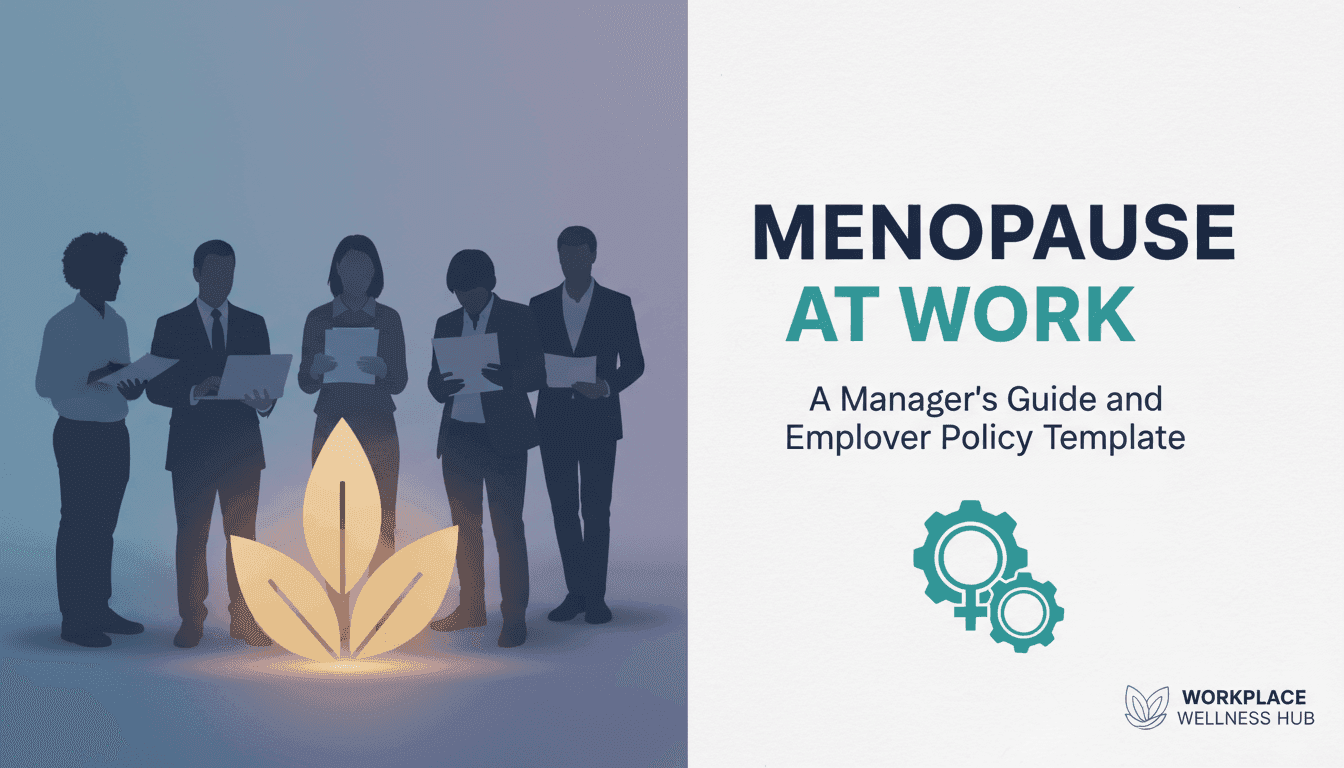
Table Of Contents
- Why Menopause Is a Workplace Issue You Can No Longer Ignore
- Understanding the Stages: Perimenopause, Menopause, and Postmenopause
- How Menopause Symptoms Affect Performance and Retention
- What Managers Need to Know: A Practical Guide
- Employer Menopause Policy Template
- Workplace Adjustments That Actually Make a Difference
- The Role of EAP and Mental Health Support
- Building a Menopause-Friendly Culture Long-Term
- Conclusion
There is a significant talent problem hiding in plain sight across workplaces today — and most managers have never been trained to address it. Menopause affects every woman at some point in her working life, typically between the ages of 45 and 55, which are often the very years when she is at the height of her professional experience and leadership capacity. Yet despite its universality, menopause remains one of the most under-discussed health topics in organizational settings.
The numbers tell a sobering story. <Research shows that menopause costs employers an estimated $1.8 billion per year in lost productivity alone>, while studies consistently show that the majority of affected employees are suffering in silence, afraid to disclose symptoms for fear of being judged or sidelined. For HR leaders, managers, and business owners, this is not just a wellness issue — it is a retention, productivity, and culture issue that demands a structured organizational response.
At iGrowFit, we believe that the healthiest, highest-performing workplaces are those that address the full human experience of their people. That means recognizing the life stages employees move through, building evidence-based policies to support them, and equipping managers with the knowledge and confidence to lead these conversations well. This guide gives you exactly that — from a manager's practical playbook to a ready-to-adapt employer policy template.
Why Menopause Is a Workplace Issue You Can No Longer Ignore {#why-menopause-is-a-workplace-issue}
For decades, menopause was treated as a private medical matter — something employees managed quietly on their own time. That approach is no longer tenable, and forward-thinking organizations are recognizing it. <Approximately 20% of the workforce is in some phase of menopause transition>, yet the topic is rarely spoken about openly in professional settings.
The financial case for action is equally compelling. <The Mayo Clinic estimates the costs of worker productivity losses due to menopausal symptoms to be about $1.8 billion, with related healthcare costs totaling over $24 billion.> These costs stem from absenteeism, presenteeism (being physically present but cognitively impaired), and, critically, the departure of experienced employees who feel unsupported. <About half of perimenopausal or menopausal women experience symptoms that disrupt their work, including hot flashes, trouble sleeping, brain fog, and depression, yet only about a quarter receive support from formal work policies or programs.>
<A 2023 survey found that almost 60% of women don't discuss menopausal symptoms at work, partly because they worry they'll be judged by co-workers or be perceived as old.> This silence carries an organizational price. When experienced, senior employees quietly reduce their ambitions, scale back their hours, or leave altogether, organizations lose institutional knowledge that took years to build. The conversation needs to change — and it starts with informed, empathetic leadership.
Understanding the Stages: Perimenopause, Menopause, and Postmenopause {#understanding-the-stages}
Effective workplace support begins with accurate understanding. Menopause is not a single event but a transition that unfolds across three distinct phases, each with its own profile of symptoms and workplace implications.
Perimenopause is the transitional period leading up to menopause, which can begin in a woman's early 40s and last for several years. Hormonal fluctuations during this stage can produce irregular periods, sleep disturbances, mood changes, and cognitive symptoms such as memory lapses and difficulty concentrating — all of which can affect daily work performance without employees or managers recognizing the underlying cause.
Menopause is defined clinically as twelve consecutive months without a menstrual period. <In high-income countries, menopause typically begins at an average age of 50–51, with a range of 45–55 years.> This is often when vasomotor symptoms such as hot flushes and night sweats are most intense, compounding the psychological and cognitive challenges employees may already be experiencing.
Postmenopause refers to the years following menopause. While some symptoms may ease, others — including impacts on bone density, cardiovascular health, and mood — continue to be relevant to an employee's overall wellbeing and working capacity. Recognizing that support needs evolve across all three stages is essential for designing a truly effective workplace policy.
How Menopause Symptoms Affect Performance and Retention {#how-menopause-affects-performance}
The symptoms of menopause are not merely uncomfortable — they have measurable consequences for cognitive performance, attendance, and career decision-making. <Research shows that the most common menopausal symptoms affecting employees more than 50% of the time while at work are fatigue (54%), difficulty sleeping (47%), poor concentration (44%), and poor memory (40%).> These are not peripheral complaints; they are core cognitive functions that underpin the ability to lead teams, manage projects, meet deadlines, and make sound decisions.
<Work performance was impacted for 65% of respondents in one cross-sectional study, and 18% had taken sick leave as a direct result of menopausal symptoms.> Perhaps more concerning for talent retention is the downstream effect on career decisions. <Data from the EMPACT Menopause Study shows that one in four women considered not pursuing or did not pursue a leadership opportunity due to the impacts of menopause; one in three considered reducing their workload; and two in five considered finding or found a new job.> These are not marginal statistics — they represent a quiet exodus of highly capable, experienced professionals.
For organizations invested in diversity, equity, and inclusion, the implications are significant. Menopause disproportionately affects women in their 40s and 50s — the same demographic that many organizations are actively trying to retain and promote into senior leadership roles. <Menopause symptoms can result in adverse work outcomes, including loss of productivity, missed days, and negative career repercussions such as changing jobs or early retirement.> A structured, empathetic organizational response is not just the right thing to do — it is a strategic imperative.
What Managers Need to Know: A Practical Guide {#what-managers-need-to-know}
Managers sit at the heart of any effective menopause support strategy. They are typically the first point of contact for an employee who is struggling, and their response — whether informed and empathetic or uninformed and dismissive — can determine whether that employee feels safe enough to seek help or chooses to suffer in silence.
1. Build awareness before the conversation happens. Managers should have a basic working knowledge of what menopause is, what the range of symptoms looks like, and why those symptoms might affect an employee's performance or attendance. This does not require medical expertise — it requires human awareness and a willingness to approach the subject without embarrassment or judgment.
2. Create the conditions for open conversation. Employees are unlikely to disclose menopausal symptoms unless they believe their manager will respond constructively. Simple, consistent signals — such as acknowledging menopause in general team communications, or mentioning EAP resources — help normalize the topic without pressuring anyone to disclose personal health information.
3. Focus on needs, not diagnoses. When an employee does disclose that they are experiencing menopause-related challenges, the manager's role is not to diagnose, advise medically, or make assumptions. The focus should be on understanding the employee's specific workplace needs and exploring practical adjustments.
4. Follow up consistently. A single supportive conversation is not enough. Menopause is a transition that unfolds over months or years, and support needs will shift over time. Build follow-up check-ins into your regular one-to-ones, and check whether any adjustments that were agreed upon are working as intended.
5. Know when to refer. Managers are not counselors or healthcare professionals. When an employee is experiencing significant mental health challenges alongside menopause — anxiety, depression, or cognitive difficulties that are severely impacting their work — managers should be confident in directing them to available resources, including the organization's Employee Assistance Program, occupational health services, or HR.
Employer Menopause Policy Template {#employer-menopause-policy-template}
A formal menopause policy signals organizational commitment and gives both employees and managers a clear reference point. <A menopause-friendly workplace policy makes support clear, private, and practical.> Below is a framework you can adapt for your organization.
[ORGANIZATION NAME] — MENOPAUSE SUPPORT POLICY
1. Policy Purpose
This policy reflects [Organization Name]'s commitment to supporting all employees who experience menopause or perimenopause. Our goal is to ensure that employees can continue to work comfortably and effectively during this life stage, that managers are equipped to have sensitive and productive conversations, and that no employee faces disadvantage or discrimination as a result of menopause-related symptoms.
2. Scope
This policy applies to all employees, managers, and HR personnel. It covers those experiencing perimenopause, menopause, and postmenopause, including early menopause arising from medical or surgical causes.
3. What Is Menopause?
Menopause is a natural biological transition that typically occurs between the ages of 45 and 55. Perimenopause may begin several years earlier. Symptoms vary widely between individuals and can include hot flushes, night sweats, fatigue, sleep disturbance, difficulty concentrating, memory issues, mood changes, and anxiety. Symptoms can be temporary or persist for several years.
4. Workplace Adjustments Available
Employees experiencing menopause-related difficulties may request the following reasonable adjustments, subject to operational requirements:
- Flexible working hours or hybrid/remote working arrangements
- Temporary adjustments to workload, deadlines, or shift patterns
- Access to a quiet, cool workspace or temperature control
- Flexibility in uniform or dress code to accommodate temperature regulation
- Access to drinking water and adequate toilet facilities
- Adjusted performance review timelines where symptoms have affected output
- Paid leave or medical leave provisions for menopause-related appointments
5. Leave Entitlements
[Organization Name] recognizes that menopause-related symptoms may occasionally require sick leave or medical appointments during working hours.
6. Confidentiality
All disclosures related to menopause will be treated with strict confidentiality. Employees are not required to disclose a menopause diagnosis to access support — adjustments can be requested through general health-related channels.
7. Manager Responsibilities
All managers are expected to:
- Complete menopause awareness training as provided by the organization
- Respond to employee disclosures with sensitivity, discretion, and a focus on practical support
- Facilitate reasonable adjustments in line with this policy
- Conduct regular check-ins with employees who have requested support
- Refer employees to HR, EAP services, or occupational health as appropriate
8. Anti-Discrimination
[Organization Name] is committed to ensuring that no employee is disadvantaged in recruitment, promotion, performance management, or any other employment matter as a result of menopause-related symptoms. Any behavior that amounts to discrimination, harassment, or victimization related to menopause will be treated as a disciplinary matter.
9. Review
This policy will be reviewed annually by HR in consultation with employee representatives.
Workplace Adjustments That Actually Make a Difference {#workplace-adjustments-that-make-a-difference}
Policy language is only as effective as its real-world implementation. Understanding which adjustments have the greatest evidence-based impact helps HR leaders and managers prioritize where to invest their attention.
Flexible working is the cornerstone adjustment. This includes options such as flexible start and finish times, hybrid working, and the ability to take breaks when symptoms peak. <89% of women cite flexible work options as one of the most helpful menopause workplace benefits>, making it the highest-value, lowest-cost change most organizations can make.
Environmental adjustments address the physical discomfort of vasomotor symptoms directly. <Employers can provide improved ventilation, better temperature-controlled spaces, and breathable uniforms to help with symptoms.> Where individual temperature control is not possible, access to desk fans, cool water stations, and a quiet rest space can meaningfully reduce the day-to-day impact of hot flushes and fatigue.
Leave provisions are also highly valued. <93% of women cite paid leave or sick days as among the most helpful menopause workplace benefits.> Reviewing your leave policy to ensure menopause-related absences are handled with the same sensitivity as any other health-related leave — and providing additional paid days where possible — sends a powerful message about organizational culture.
Health and wellbeing benefits should be reviewed to ensure they include menopause-relevant provisions. <Review whether health insurance covers hormone replacement therapy and testing and treating low bone density and heart health, two risk factors that directly impact menopausal women.> Ensuring employees know how to access these benefits is equally important — many organizations offer support that employees are simply unaware of.
The Role of EAP and Mental Health Support {#the-role-of-eap-and-mental-health-support}
The psychological dimension of menopause is frequently underestimated in workplace settings. Beyond the well-known physical symptoms, menopause has significant impacts on mental health — including elevated rates of anxiety, depression, mood instability, and cognitive difficulties that can compound professional pressures enormously. <Menopause impacts mood, mental health, and cognitive abilities, creating an increased need for mental health support and treatment.>
This is where a well-structured Employee Assistance Program becomes one of the most valuable tools an employer can offer. An EAP that includes access to psychologists, counselors, and coaches — people who understand the intersection of menopause, mental health, and workplace performance — gives employees a confidential, low-barrier route to professional support that they can access on their own terms.
At iGrowFit, our multi-disciplinary EAP team includes psychologists, counselors, and coaches who work with employees experiencing the full spectrum of life transition challenges — including menopause. Using evidence-based approaches rooted in our ConPACT framework, we help employees build the psychological capital they need to navigate difficult life stages without sacrificing their professional performance or personal wellbeing. Our work with over 450 companies and 75,000+ employees has consistently demonstrated that structured psychological support translates directly into improved engagement, reduced absenteeism, and stronger team performance.
Building a Menopause-Friendly Culture Long-Term {#building-a-menopause-friendly-culture}
Policies and adjustments are essential foundations, but the most lasting impact comes from culture change. A menopause-friendly organization is one where employees at any stage of the transition feel genuinely safe to speak up, where managers respond with confidence and compassion, and where the topic is woven into the broader fabric of health and wellbeing conversations — not treated as an awkward exception.
<A recent report indicated that 64% of employees want menopause-related benefits, highlighting a growing demand for supportive workplace practices.> Yet the gap between employer intent and employee experience remains wide. <There is a 73-point gap between HR benefit managers who say they discuss menopause-related issues with employees and female employees who say they have actually talked about menopause with HR.> Closing that gap requires deliberate, ongoing effort — not a one-time policy launch.
Practical steps for sustaining cultural change include: appointing a menopause champion or ally network within the organization; incorporating menopause into existing diversity, equity, and inclusion frameworks; including menopause awareness as a standing element of manager onboarding and annual training refreshers; and regularly surveying employees about the support they need. <By fostering a culture of open communication, employees may be more inclined to share their concerns or needs related to menopause,> which in turn allows managers and HR teams to respond before challenges escalate into absences or departures.
The business case is clear. <The majority of women — 58% — with access to menopause benefits say this support positively impacts their work.> Organizations that treat menopause as a strategic wellbeing priority, not a peripheral HR matter, retain more experienced talent, build more inclusive cultures, and ultimately perform better. For organizations that partner with iGrowFit, embedding menopause support within a broader, evidence-based people development strategy is part of what it means to build a workplace where every employee can consistently hit goals and finish tasks — at every stage of their career.
Conclusion {#conclusion}
Menopause is not a niche issue. It affects a significant proportion of the workforce during the years when employees are most experienced, most capable, and most valuable to their organizations. The research is unambiguous: symptoms are real, the workplace impact is substantial, and the cost of doing nothing — in lost productivity, increased absenteeism, and preventable attrition — runs into billions of dollars globally.
But the story is equally clear on the other side: organizations that build structured support, train their managers well, implement thoughtful policies, and connect employees to psychological resources see measurable improvements in engagement, retention, and performance. The policy template and manager guidance in this article give you a practical starting point. The next step is making it live and breathe within your organizational culture.
If you are ready to build a workplace where every employee — regardless of their life stage — can do their best work, iGrowFit is here to help.
Ready to Build a Menopause-Supportive Workplace? Let's Talk.
At iGrowFit, our multi-disciplinary EAP team supports organizations in creating evidence-based people strategies that address the full spectrum of employee wellbeing — including life stage transitions like menopause. From manager training and psychological coaching to organizational policy design, we bring over 15 years of expertise to help your people thrive.
📲 WhatsApp us today to find out how we can support your team — and take the first step toward building a truly inclusive, high-performance workplace.