Quarterly Mental Health Town Hall: A Comprehensive Agenda Template for Workplace Wellbeing
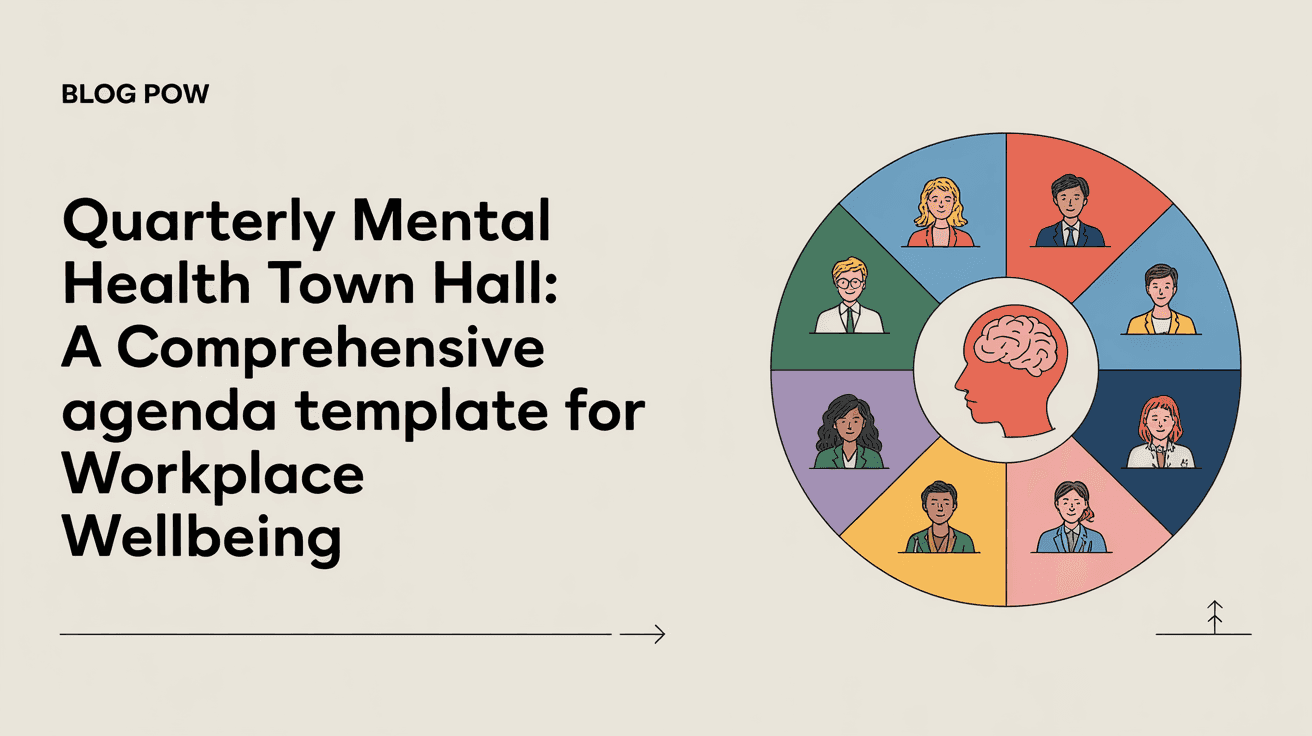
Table Of Contents
- Understanding the Purpose of Mental Health Town Halls
- Pre-Planning Essentials
- The Quarterly Mental Health Town Hall Agenda Template
- Post-Town Hall Follow-Up
- Customizing Your Town Hall for Different Organizational Needs
- Common Challenges and Solutions
- Measuring Town Hall Effectiveness
- Conclusion
Quarterly Mental Health Town Hall: A Comprehensive Agenda Template for Workplace Wellbeing
In today's fast-paced corporate environment, mental health has emerged as a critical component of organizational success. Regular mental health town halls provide a structured forum for companies to address wellbeing challenges, share resources, and foster a supportive workplace culture. These quarterly gatherings serve as touchpoints that demonstrate an organization's commitment to employee mental health beyond occasional initiatives.
According to recent studies, organizations that regularly discuss mental health experience 30% higher employee engagement and 25% lower turnover rates. A well-structured mental health town hall can transform workplace culture, normalize mental health conversations, and connect employees with vital resources when they need them most.
This comprehensive guide provides a flexible, evidence-based template for conducting effective quarterly mental health town halls. Whether you're implementing your first town hall or looking to enhance your existing wellbeing program, this agenda template will help you create meaningful discussions that drive positive change throughout your organization.
Understanding the Purpose of Mental Health Town Halls
Mental health town halls serve multiple strategic purposes within an organization. They create a dedicated space for dialogue about psychological wellbeing, signal leadership's commitment to employee mental health, and provide a consistent platform for education and resource sharing. Unlike standard meetings, these town halls specifically aim to:
- Normalize conversations around mental health and reduce stigma
- Provide regular updates on company wellbeing initiatives and available resources
- Gather feedback directly from employees about their mental health needs
- Build community through shared experiences and collective problem-solving
- Educate staff on various aspects of psychological wellbeing
Quarterly scheduling strikes an optimal balance—frequent enough to maintain momentum but spaced adequately to implement feedback and measure impact between sessions. This cadence also aligns with business quarters, making it easier to integrate with existing organizational rhythms and reporting cycles.
Pre-Planning Essentials
Before diving into the agenda template, several preparatory elements are crucial for town hall success:
-
Secure leadership buy-in: Mental health town halls require visible executive support. Ensure at least one senior leader participates actively in each session.
-
Form a diverse planning committee: Include representatives from different departments, seniority levels, and backgrounds to ensure the town hall addresses varied perspectives and needs.
-
Establish psychological safety guidelines: Develop and communicate clear protocols for confidentiality, respectful communication, and appropriate sharing.
-
Determine the format: Decide whether your town hall will be in-person, virtual, or hybrid based on your workforce distribution and needs.
-
Select appropriate technology: For virtual or hybrid formats, ensure your chosen platform supports interactive features like polling, Q&A, and breakout rooms.
-
Prepare communication materials: Create announcements that clearly articulate the town hall's purpose, format, and value to employees.
-
Arrange for professional support: Have mental health professionals available during and after the town hall to support employees who may be triggered by discussions.
The Quarterly Mental Health Town Hall Agenda Template
The following agenda template provides a comprehensive framework that you can adapt to your organization's specific culture and needs. Each section serves a distinct purpose in creating an effective mental health discussion.
Opening and Setting the Tone
Duration: 10-15 minutes
This crucial first segment establishes psychological safety and sets expectations for the town hall:
-
Welcome and purpose statement: Begin with a senior leader welcoming participants and articulating why these conversations matter to the organization.
-
Psychological safety reminder: Explicitly state confidentiality expectations, participation guidelines, and acknowledge that mental health discussions can evoke various emotions.
-
Icebreaker activity: Start with a brief, low-pressure activity that introduces the theme. For example, "Share one self-care practice you've found helpful recently" or "What's one thing that supported your mental wellbeing this quarter?"
-
Agenda overview: Briefly outline what participants can expect during the session.
Company Mental Health Updates
Duration: 15-20 minutes
This section provides transparency about organizational mental health initiatives and progress:
-
Review of previous town hall action items: Discuss progress on commitments made during the previous session, demonstrating accountability.
-
Mental health metrics: Share relevant, anonymized data on program utilization, survey results, or other indicators of organizational mental health (maintaining appropriate privacy).
-
New initiative announcements: Introduce any new mental health benefits, resources, or programs becoming available to employees.
-
Recognition of mental health champions: Acknowledge individuals or teams who have contributed positively to workplace wellbeing (with prior permission).
Educational Component
Duration: 20-25 minutes
Each quarterly town hall should feature an educational segment focused on a specific mental health topic. This creates a progressive learning journey that builds employee mental health literacy over time:
-
Expert presentation: Invite an internal or external mental health professional to present on the quarterly theme. Some suggested rotating topics include:
- Q1: Stress management and burnout prevention
- Q2: Building resilience and psychological capital
- Q3: Creating healthy work-life boundaries
- Q4: Seasonal affective disorder and holiday stress
-
Skill-building exercise: Include a brief, practical activity related to the educational topic that participants can immediately apply.
-
Resource connection: Explicitly link the educational content to specific company resources that support the featured topic.
Open Discussion Forum
Duration: 25-30 minutes
This central component creates space for authentic dialogue about mental health challenges and solutions:
-
Structured discussion prompts: Prepare 3-5 questions related to the educational topic or current organizational challenges. For example:
- "What aspects of our work environment support or hinder your mental wellbeing?"
- "How can managers better support team mental health?"
- "What resources would help you manage work-related stress?"
-
Multiple participation channels: Offer various ways for employees to contribute, including:
- Verbal sharing in the main session
- Written comments in chat or anonymous submission tools
- Small breakout discussions with summarized reporting
- Pre-submitted questions or concerns
-
Moderated Q&A: Allow time for employees to ask questions about mental health resources, policies, or concerns.
Resource Spotlight
Duration: 10-15 minutes
This section highlights specific mental health resources available to employees:
-
Deep dive on EAP benefits: Provide detailed explanation of how to access counseling services, including a step-by-step walkthrough of the process.
-
Resource demonstration: Showcase a specific mental health tool, app, or resource available to employees with a brief demonstration.
-
Success stories: With appropriate permissions, share anonymous examples of how employees have successfully utilized company resources.
Action Items and Next Steps
Duration: 10-15 minutes
Ensure the town hall leads to concrete improvements by establishing clear next steps:
-
Commitment statements: Have leadership articulate specific actions they commit to taking based on town hall discussions.
-
Feedback collection: Conduct a brief poll on town hall effectiveness and topics of interest for the next session.
-
Timeline communication: Clearly state when employees can expect updates on action items and when the next town hall will occur.
-
Volunteer opportunities: Invite employees interested in mental health advocacy to join planning efforts for future town halls or wellbeing initiatives.
Closing Remarks
Duration: 5-10 minutes
End on a positive, forward-looking note that reinforces psychological safety:
-
Gratitude and acknowledgment: Thank participants for their vulnerability and contributions.
-
Resource reminder: Reiterate immediate support resources for anyone who found discussions triggering.
-
Closing reflection: Share a brief closing thought, quote, or mindfulness exercise that reinforces the importance of mental wellbeing.
Post-Town Hall Follow-Up
The effectiveness of mental health town halls extends beyond the event itself through thoughtful follow-up:
-
Session recording and resource sharing: Distribute recording (if appropriate) and presentation materials for those unable to attend, with proper confidentiality protocols.
-
Action item tracking: Create a transparent system for monitoring progress on commitments made during the town hall.
-
Feedback analysis: Review participant feedback to identify improvements for future sessions.
-
Communication cascade: Provide managers with talking points to continue mental health conversations in team meetings.
-
Quick-win implementation: Identify and act on simple suggestions that can be implemented before the next town hall to build momentum.
Customizing Your Town Hall for Different Organizational Needs
While the template provides a comprehensive framework, effective town halls should be tailored to your specific organizational context:
For small organizations (under 50 employees):
- Consider more intimate discussion formats with less formal structure
- Potentially increase frequency to monthly with shorter durations
- Enable more direct dialogue with leadership
For large enterprises:
- Supplement company-wide town halls with department-specific follow-up sessions
- Utilize technology for anonymous question submission and polling
- Consider recording sessions for shift workers or global teams
For remote/hybrid workforces:
- Prioritize inclusive technology that equalizes participation
- Build in more structured interaction points to counter digital fatigue
- Consider sending physical wellness materials to participants' homes
For organizations new to mental health discussions:
- Start with more educational content and gradually increase open discussion
- Bring in external experts initially to establish credibility
- Focus heavily on psychological safety protocols
Common Challenges and Solutions
Anticipating potential obstacles will help you navigate them effectively:
Challenge: Low participation or engagement Solution: Begin with anonymous pre-submission of questions, schedule during work hours (not lunch), and have leaders model vulnerable participation.
Challenge: Conversations becoming too personal or inappropriate Solution: Establish clear sharing guidelines, have a moderator prepared to redirect, and provide alternative channels for personal concerns.
Challenge: Difficulty measuring impact Solution: Implement pre/post surveys on mental health stigma, track resource utilization rates following town halls, and collect qualitative feedback on culture shifts.
Challenge: Leadership resistance or superficial support Solution: Present business case data connecting mental health initiatives to productivity and retention, start with leaders who are already advocates, and provide talking points/coaching for executives.
Measuring Town Hall Effectiveness
To ensure your mental health town halls are delivering value, implement a measurement strategy that captures both immediate feedback and longitudinal impact:
Immediate metrics:
- Attendance and participation rates
- Post-event satisfaction surveys
- Resource access spikes following town halls
- Qualitative feedback on format and content
Long-term indicators:
- Changes in mental health stigma (measured via anonymous surveys)
- Trends in EAP or wellbeing program utilization
- Mental health questions in engagement surveys
- Retention rates and exit interview data
- Manager confidence in supporting team mental health
Regularly review these metrics with your planning committee to continuously refine your approach based on what resonates most with your workforce.
At iGrowFit, we've observed that organizations seeing the greatest impact from mental health town halls are those that maintain consistency while being responsive to employee feedback and evolving needs.
Conclusion
Quarterly mental health town halls represent a powerful tool for organizations committed to fostering psychologically healthy workplaces. When thoughtfully structured, these sessions create regular touchpoints that normalize mental health discussions, connect employees with vital resources, and demonstrate organizational commitment to wellbeing.
The agenda template outlined in this guide provides a comprehensive framework that balances education, discussion, and action planning. By adapting this template to your specific organizational culture and needs, you can create meaningful conversations that drive positive change throughout your company.
Remember that effective mental health town halls are not standalone events but part of an integrated wellbeing strategy. Each town hall should build upon previous sessions, respond to emerging needs, and connect to broader organizational wellbeing initiatives.
With consistent implementation and continuous refinement, your quarterly mental health town halls can become a cornerstone of your workplace culture—one that values psychological wellbeing as essential to both human thriving and organizational success.
Ready to transform your organization's approach to mental health? Contact iGrowFit today to learn how our team of management consultants, psychologists, and wellbeing experts can help you implement effective mental health town halls and comprehensive EAP solutions tailored to your organization's unique needs.