Sleep Hygiene Programs at Work: Comprehensive ROI & Implementation Guide
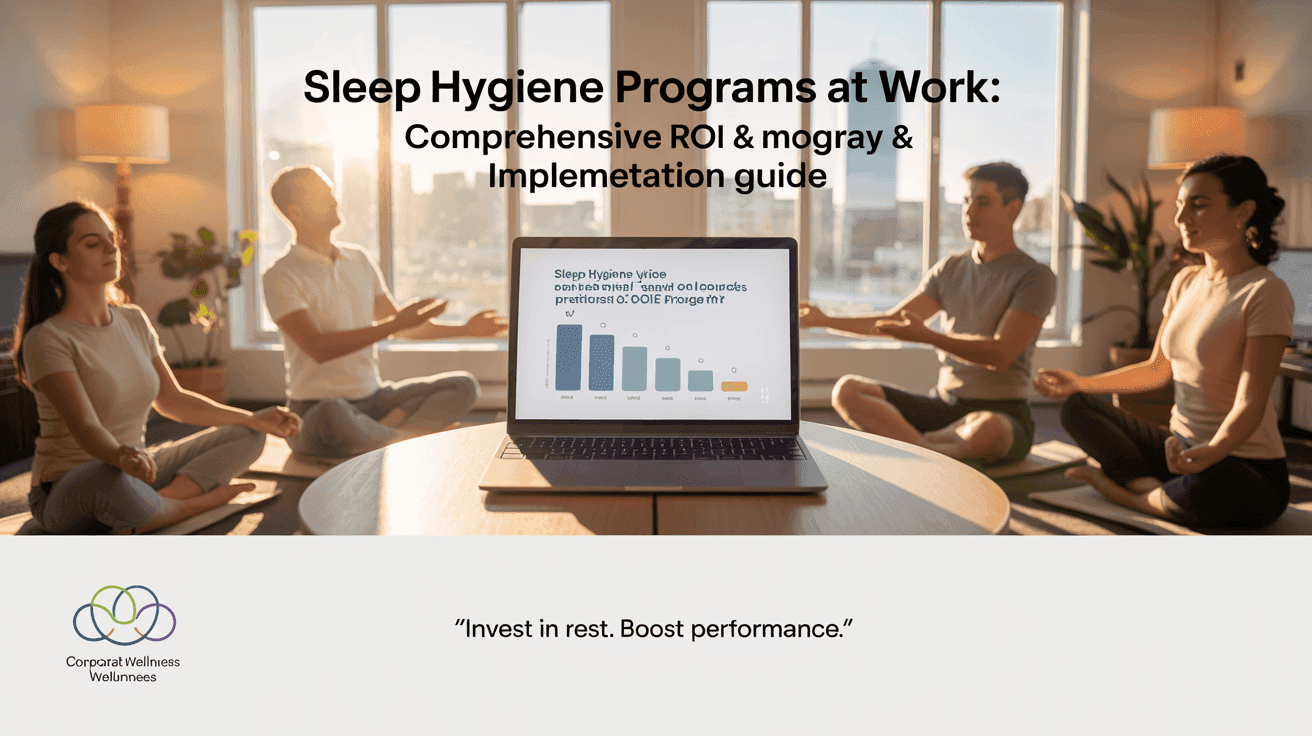
Table Of Contents
- Understanding Sleep Hygiene in the Workplace Context
- The Business Case for Workplace Sleep Hygiene Programs
- Calculating ROI: Metrics That Matter
- Implementation Framework for Workplace Sleep Programs
- Common Implementation Challenges and Solutions
- Case Studies: Success Stories from Real Organizations
- Measuring Program Success: Beyond Financial ROI
- Conclusion: The Sleep-Performance Connection
In today's high-performance workplace, organizations are increasingly recognizing the critical link between employee sleep quality and business outcomes. Sleep deprivation costs U.S. companies an estimated $63.2 billion annually in lost productivity, making workplace sleep hygiene programs not just a wellness perk but a strategic business investment.
As organizations seek to optimize human capital while managing healthcare costs, sleep initiatives represent an evidence-based approach to enhancing both employee wellbeing and organizational performance. This comprehensive guide explores how implementing effective sleep hygiene programs delivers measurable returns while providing practical frameworks for successful implementation.
Drawing on over a decade of experience helping 450+ Fortune 500 companies and MNCs develop psychological capital for peak performance, we'll walk through the business case, ROI calculation methodologies, implementation strategies, and success measurement techniques for workplace sleep hygiene programs that truly deliver results.
Understanding Sleep Hygiene in the Workplace Context
Sleep hygiene encompasses the habits, environmental factors, and practices that promote quality sleep. In the workplace context, sleep hygiene programs address how organizational policies, workplace culture, and employee education can collectively support better sleep health among the workforce.
Poor sleep quality affects approximately 35% of the global adult population and has direct implications for workplace functioning. Sleep-deprived employees experience:
- Reduced cognitive processing speed (up to 50% slower reaction times)
- Diminished decision-making capabilities
- Increased error rates (up to 30% higher in some studies)
- Compromised emotional regulation
- Lower creativity and problem-solving capacity
Workplace sleep hygiene programs recognize that employee sleep patterns are influenced by both individual behaviors and organizational factors. While traditional wellness programs might focus solely on employee education, comprehensive sleep hygiene initiatives address systemic workplace elements that impact sleep, including work schedules, technology use policies, physical environment design, and leadership messaging around recovery time.
The Business Case for Workplace Sleep Hygiene Programs
The connection between sleep and workplace performance is supported by robust scientific evidence. Research from Harvard Medical School estimates that insomnia alone costs the average U.S. worker 11.3 days of productivity each year. When multiplied across an organization, this represents substantial operational inefficiency.
The business case for sleep hygiene programs centers on four key value drivers:
Performance Enhancement
Well-rested employees demonstrate measurable improvements in cognitive functions essential for workplace performance. Studies show that proper sleep improves:
- Attention span and concentration (20-30% improvement)
- Working memory capacity
- Creative problem-solving (60% better at innovative thinking)
- Learning and information retention
- Decision quality and ethical judgment
Risk Mitigation
Sleep-deprived workers pose significant safety and operational risks. Organizations with sleep hygiene programs report:
- 25-30% reduction in workplace accidents
- Decreased incidence of critical errors
- Lower rates of professional liability issues
- Reduced cybersecurity vulnerabilities (sleep-deprived employees are more likely to fall for phishing attempts)
Healthcare Cost Reduction
Chronic sleep deficiency correlates with numerous health conditions that drive up employer healthcare costs:
- Cardiovascular disease (2-3x higher risk)
- Type 2 diabetes
- Obesity
- Immune system dysfunction
- Mental health disorders
Companies implementing comprehensive sleep programs report healthcare cost reductions of 5-14% per employee annually.
Talent Acquisition and Retention
As wellness benefits become increasingly important to job seekers, organizations with robust sleep support demonstrate:
- Enhanced employer brand perception
- 18% improvement in employee satisfaction scores
- 23% reduction in turnover among high-performing employees
- Greater success recruiting top talent
Calculating ROI: Metrics That Matter
Establishing a meaningful ROI framework requires identifying both the costs of implementation and the value created through improved sleep health.
Implementation Cost Components
When calculating program costs, consider these elements:
- Program Development: Research, design, and customization costs
- Technology Investments: Sleep tracking tools, apps, or platform subscriptions
- Environmental Modifications: Nap rooms, lighting adjustments, or quiet zones
- Educational Resources: Training materials, workshops, and expert consultations
- Administrative Overhead: Program management and evaluation resources
Value Creation Measurements
A comprehensive ROI calculation captures value across multiple dimensions:
Productivity Metrics
- Reduction in absenteeism (typically 5-10% improvement)
- Presenteeism improvement (measured through validated assessment tools)
- Task completion rates and quality measures
- Project delivery timelines
Health Cost Savings
- Reduced healthcare utilization (fewer doctor visits, medications)
- Decreased disability claims
- Lower workers' compensation costs
- Reduced accident-related expenses
Workforce Optimization
- Improved retention (reduction in replacement costs)
- Enhanced recruitment effectiveness
- Faster onboarding and time-to-productivity
- Higher engagement scores
ROI Calculation Framework
To calculate program ROI, use this formula:
ROI = [(Value of Benefits - Program Costs) / Program Costs] × 100
For example, if a 500-employee organization invests $75,000 in a sleep hygiene program and achieves $225,000 in combined productivity improvements and health cost savings:
ROI = [($225,000 - $75,000) / $75,000] × 100 = 200%
This represents a 2:1 return on investment—a compelling business case for program implementation.
Implementation Framework for Workplace Sleep Programs
Successful implementation follows our ConPACT framework (Consultancy, Profiling, Assessments, Coaching, and Training), applied to sleep hygiene initiatives:
Assessment and Baseline Establishment
Start by understanding your organization's current sleep health status:
- Conduct anonymous sleep quality surveys using validated instruments
- Analyze existing productivity, absence, and health utilization data
- Identify high-risk departments or roles
- Assess current workplace policies impacting sleep (e.g., email hours, shift scheduling)
- Benchmark against industry standards
Program Design and Customization
Develop a multi-faceted program that addresses both individual and organizational factors:
Individual-Level Interventions:
- Educational workshops on sleep science and techniques
- Digital tools for sleep tracking and improvement
- Sleep coaching services
- Cognitive behavioral therapy for insomnia (CBT-I) resources
Organizational-Level Interventions:
- Work scheduling policies that respect circadian rhythms
- Email and communication boundaries
- Travel policies that accommodate sleep recovery
- Physical environment modifications
- Leadership modeling of healthy sleep behaviors
Implementation Sequence
Phase your implementation to build momentum and engagement:
-
Leadership Engagement (Weeks 1-4):
- Executive education on sleep-performance connection
- Leader commitment to modeling behaviors
- Identification of executive sponsors
-
Awareness Building (Weeks 5-8):
- Organization-wide communication campaign
- Sleep science education sessions
- Initial assessment opportunities
-
Tool and Resource Deployment (Weeks 9-16):
- Launch of sleep improvement resources
- Integration with existing wellness platforms
- Manager training on supporting team sleep health
-
Policy and Environmental Adjustments (Weeks 17-26):
- Review and modification of relevant policies
- Workspace adjustments (lighting, quiet zones)
- Workflow optimization
-
Reinforcement and Refinement (Ongoing):
- Regular check-ins and progress assessments
- Success story sharing
- Program adjustments based on feedback
Common Implementation Challenges and Solutions
Anticipating and addressing implementation barriers is essential for program success:
Challenge: Leadership Skepticism
Solution: Present compelling ROI data from similar organizations and industry research. Start with a pilot program in one department to generate internal success metrics.
Challenge: Employee Privacy Concerns
Solution: Emphasize anonymous aggregate data collection, provide clear opt-in protocols, and ensure transparent communication about how sleep data will be used.
Challenge: Inconsistent Participation
Solution: Implement a thoughtfully designed incentive structure tied to participation rather than outcomes. Integrate sleep program elements into existing wellness initiatives to reduce friction.
Challenge: Work Culture Resistance
Solution: Address underlying cultural norms through leadership modeling and systematic policy changes. Celebrate and recognize teams that demonstrate healthy sleep-supporting behaviors.
Challenge: Resource Constraints
Solution: Begin with low-cost interventions like policy adjustments and educational components. Utilize phased implementation to distribute costs over time and demonstrate early wins to justify additional investment.
Case Studies: Success Stories from Real Organizations
Manufacturing Sector: Shift Optimization Program
A global manufacturing client with 2,400 employees implemented a comprehensive sleep hygiene program focused on shift schedule optimization and sleep education. Results after 18 months included:
- 22% reduction in workplace accidents
- 8.3% decrease in absenteeism
- 12% improvement in quality control metrics
- Estimated ROI of 340% based on reduced accidents and improved productivity
Financial Services: Executive Performance Enhancement
A financial services firm with 850 employees implemented a sleep performance program targeted initially at executive leadership. The program expanded company-wide after demonstrating results including:
- 14% improvement in decision quality metrics
- 9% reduction in healthcare utilization
- 31% decrease in reported stress levels
- Enhanced client satisfaction scores
Technology Company: Remote Work Sleep Support
A technology company with a primarily remote workforce of 1,200 employees implemented a digital sleep hygiene program to address boundary challenges in the work-from-home environment. Outcomes included:
- 17% improvement in reported sleep quality
- 23% reduction in burnout indicators
- 11% increase in productivity measures
- 14% enhancement in innovation metrics
Measuring Program Success: Beyond Financial ROI
Comprehensive program evaluation captures both quantitative and qualitative success indicators:
Direct Performance Metrics
- Productivity indices (output per hour, error rates, completion times)
- Absenteeism and presenteeism reduction
- Healthcare utilization and cost tracking
- Safety incident frequency
Sleep Quality Improvements
- Sleep duration increases
- Reduced sleep latency (time to fall asleep)
- Decreased sleep fragmentation
- Improved subjective sleep quality ratings
Workforce Wellbeing Indicators
- Engagement scores
- Mental health metrics
- Work-life satisfaction measures
- Energy and vitality self-assessments
Organizational Culture Impact
- Leadership behavior changes
- Policy adherence metrics
- Communication pattern adjustments
- Evolution in organizational values around recovery
Establish quarterly review processes to track these metrics and adjust program elements based on findings. The most successful programs continuously evolve based on participant feedback and outcome data.
Conclusion: The Sleep-Performance Connection
Investing in workplace sleep hygiene represents a strategic approach to enhancing organizational performance through human capital optimization. The evidence clearly demonstrates that well-rested employees are more productive, innovative, engaged, and healthy—translating to measurable business results.
By implementing structured sleep hygiene programs using the frameworks outlined in this guide, organizations can expect to see benefits across multiple performance dimensions while contributing positively to employee wellbeing. The ROI calculation model provides a clear business case for these initiatives, moving them from the "nice to have" category to essential performance infrastructure.
As workplace demands continue to intensify in our connected global economy, organizations that proactively address sleep quality will gain significant competitive advantages through enhanced human performance and reduced health-related costs. The question is no longer whether sleep hygiene programs are worth implementing, but rather how quickly organizations can deploy them to capture these benefits.
Sleep hygiene programs represent a scientifically validated approach to enhancing workplace performance while simultaneously supporting employee wellbeing. By following the implementation frameworks and ROI calculation methodologies outlined in this guide, organizations can develop customized sleep initiatives that deliver measurable business results.
The most successful organizations recognize that sleep is not merely a personal health matter but a strategic performance variable that can be optimized through thoughtful workplace policies, education, and cultural norms. As the research consistently demonstrates, well-rested employees make better decisions, collaborate more effectively, innovate more creatively, and maintain higher performance levels—all while experiencing greater job satisfaction and improved health outcomes.
Through our ConPACT approach, organizations can design, implement and measure sleep hygiene programs that align with both business objectives and employee needs. The resulting improvements in productivity, health costs, and talent management create compelling returns that justify continued investment in sleep as a core performance variable.
Ready to implement a sleep hygiene program that delivers measurable ROI for your organization? Contact iGrowFit today to learn how our evidence-based approach can help your employees Hit Goals and Finish Tasks through optimized sleep performance.