Wearables & Biometrics: Can They Really Predict Employee Burnout?
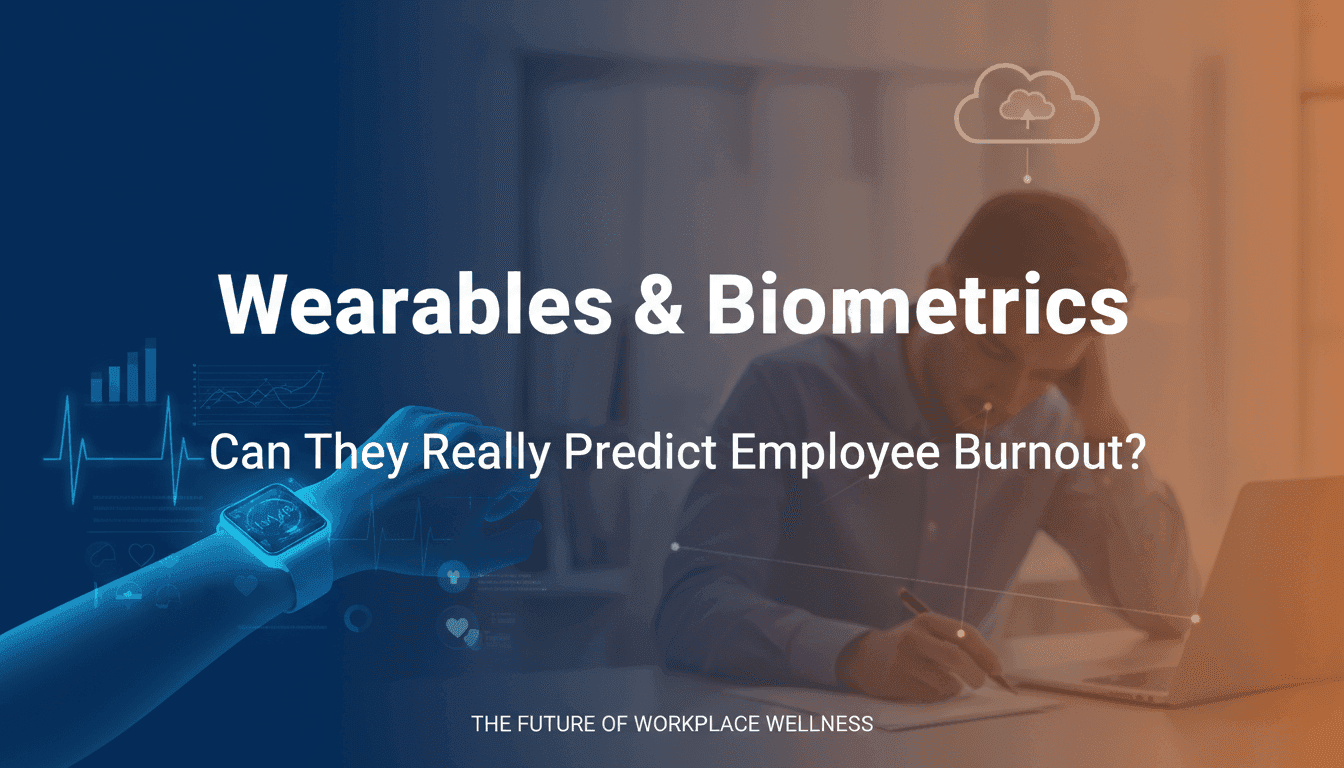
Table Of Contents
- Understanding the Burnout Epidemic
- How Wearables and Biometrics Work
- The Science Behind Burnout Prediction
- Real-World Applications in the Workplace
- The Accuracy Question: What Research Reveals
- Privacy, Ethics, and Implementation Considerations
- Beyond Prediction: Creating Comprehensive Wellbeing Strategies
- The Future of Biometric Burnout Prevention
The executive seems fine during Monday's team meeting, but her smartwatch tells a different story. Elevated resting heart rate, disrupted sleep patterns for three consecutive weeks, and heart rate variability that's steadily declining. Is this data simply tracking stress, or is it predicting an impending burnout crisis?
As workplace burnout reaches epidemic proportions, affecting an estimated 76% of employees according to recent studies, organizations are turning to technology for early warning systems. Wearable devices and biometric monitoring promise to detect burnout before it derails careers and damages organizational performance. But can a device on your wrist truly predict something as complex and multifaceted as burnout?
This question sits at the fascinating intersection of workplace psychology, data science, and employee wellbeing. For organizations committed to developing their people and maintaining peak performance, understanding the capabilities and limitations of biometric burnout prediction isn't just academic curiosity. It's a strategic imperative that could reshape how we approach employee assistance programs and preventive mental health initiatives.
Understanding the Burnout Epidemic
Burnout isn't simply feeling tired after a challenging week. The World Health Organization officially recognized it in 2019 as an occupational phenomenon characterized by three dimensions: feelings of energy depletion or exhaustion, increased mental distance from one's job or feelings of negativity toward it, and reduced professional efficacy. This recognition elevated burnout from a buzzword to a legitimate workplace health concern requiring systematic intervention.
The cost of burnout extends far beyond individual suffering. Organizations face decreased productivity, increased absenteeism, higher turnover rates, and diminished innovation when employees experience chronic workplace stress. Research from Gallup suggests that burned-out employees are 63% more likely to take sick days and 2.6 times more likely to actively seek different employment. For companies that have invested significantly in talent development, losing high-performers to burnout represents both a financial loss and a strategic setback.
Traditionally, burnout identification has relied on self-reported surveys, periodic check-ins, and manager observations. These methods, while valuable, often detect burnout only after it has already taken hold. By the time an employee completes a burnout inventory revealing severe symptoms, they may have been struggling for months. This reactive approach prompted researchers and technology companies to explore whether objective biometric data could provide earlier, more reliable warning signs.
How Wearables and Biometrics Work
Modern wearable devices have evolved far beyond simple step counters. Today's workplace wellness wearables typically incorporate multiple sensors that continuously collect physiological data. Photoplethysmography (PPG) sensors measure heart rate by detecting blood volume changes in the wrist. Accelerometers and gyroscopes track movement patterns and sleep quality. Some advanced devices include electrodermal activity sensors that measure skin conductance, indicating sympathetic nervous system activation associated with stress.
These devices generate massive datasets by collecting measurements throughout the day and night. A single employee wearing a health tracker might generate thousands of data points weekly, including resting heart rate, active heart rate, heart rate variability, sleep duration, sleep stages, physical activity levels, and recovery metrics. When aggregated and analyzed using machine learning algorithms, these physiological patterns can reveal trends invisible to casual observation.
The workplace implementation of biometric monitoring varies considerably. Some organizations provide wearables as part of voluntary wellness programs, offering incentives for participation. Others integrate biometric data into comprehensive health platforms that combine physiological metrics with self-reported wellbeing assessments. The most sophisticated approaches at companies like iGrowFit integrate biometric insights with psychological profiling and evidence-based interventions, creating a holistic picture of employee wellbeing that extends beyond raw data.
The Science Behind Burnout Prediction
Key Biometric Indicators
Research has identified several physiological markers that correlate with chronic stress and burnout. Heart rate variability (HRV) stands out as particularly significant. HRV measures the variation in time intervals between heartbeats and serves as an indicator of autonomic nervous system balance. Higher HRV generally indicates better stress resilience and recovery capacity, while chronically low HRV correlates with exhaustion and reduced adaptive capacity.
A 2021 study published in the Journal of Occupational Health Psychology found that employees who later reported clinical burnout symptoms showed declining HRV patterns for 4-6 weeks before their subjective experience matched diagnostic criteria. This temporal gap suggests that biometric data might indeed provide an early warning window before employees consciously recognize their deteriorating wellbeing.
Sleep architecture provides another critical data stream. Burnout doesn't just reduce total sleep time; it disrupts sleep quality in measurable ways. Wearables that track sleep stages reveal that individuals experiencing chronic workplace stress often show reduced deep sleep percentages, increased nighttime awakenings, and irregular sleep-wake timing. These patterns appear consistently across studies, even when individuals report feeling that they're sleeping adequately.
Resting heart rate elevation represents a third significant marker. While many factors influence resting heart rate, persistent elevation above an individual's established baseline often indicates sustained physiological stress. When resting heart rate remains elevated for multiple weeks despite adequate recovery time, it suggests the body is maintaining a heightened state of arousal incompatible with restoration and recovery.
Physical activity patterns also provide valuable context. Individuals approaching burnout frequently show declining activity levels, reduced workout intensity, or abandonment of previously consistent exercise routines. These behavioral changes reflect both depleted energy reserves and the cognitive exhaustion that makes initiating discretionary activities increasingly difficult.
Pattern Recognition and AI Integration
The real predictive power emerges not from individual metrics but from pattern recognition across multiple data streams. Machine learning algorithms can identify subtle combinations of changes that precede burnout more reliably than any single indicator. An employee might show slightly elevated resting heart rate, marginally reduced HRV, a modest decrease in exercise frequency, and a small increase in sleep latency. Individually, none of these changes raises red flags. Together, they form a pattern that sophisticated algorithms can recognize as consistent with pre-burnout trajectories.
Researchers at Stanford University developed a predictive model that combines wearable data with calendar activity (meeting density, email volume, working hours) to forecast burnout risk with approximately 70% accuracy several weeks before self-reported symptoms emerge. While 70% accuracy leaves room for improvement, it represents a significant advance over traditional assessment methods that only capture burnout after it has fully manifested.
The challenge lies in personalization. Physiological baselines vary tremendously between individuals. An HRV reading indicating excellent recovery for one person might represent significant stress for another. Effective predictive systems require establishing individual baselines over time, then monitoring for deviations from personal norms rather than applying universal thresholds. This personalization requirement means predictive accuracy improves the longer an individual uses the system.
Real-World Applications in the Workplace
Several forward-thinking organizations have begun piloting biometric burnout prediction programs. A European financial services company implemented wearable-based monitoring for 500 employees in high-stress trading roles. When the system flagged individuals showing concerning physiological patterns, it triggered confidential outreach from occupational health staff offering support resources. The company reported a 34% reduction in stress-related sick leave over 18 months, though they acknowledged that simply offering the program may have increased overall wellbeing awareness.
A technology company in Singapore partnered with their EAP provider to integrate wearable data with existing psychological support services. Rather than using biometric data for surveillance, they positioned it as a personal health tool where employees maintained complete control over data sharing. Those who opted to share concerning patterns received prioritized access to counseling, coaching, and workplace adjustments. This approach respected privacy while creating pathways for early intervention.
The healthcare sector has shown particular interest, given the well-documented burnout crisis among medical professionals. A hospital system provided wearables to nursing staff and developed dashboards that visualized aggregated, anonymized recovery metrics for different units. When specific departments consistently showed poor recovery patterns, hospital leadership investigated workload distribution, staffing ratios, and scheduling practices. This systemic approach used biometric data not to identify struggling individuals but to reveal organizational factors contributing to widespread stress.
The Accuracy Question: What Research Reveals
Despite promising results, the scientific community maintains healthy skepticism about biometric burnout prediction. A comprehensive meta-analysis examining the relationship between physiological stress markers and self-reported burnout found moderate correlations, but also substantial variability across studies. The relationship between biology and psychology isn't straightforward or deterministic.
Critically, physiological stress responses don't exclusively indicate workplace burnout. Elevated heart rate, disrupted sleep, and reduced HRV can result from physical illness, relationship problems, financial stress, or numerous other factors unrelated to work. A predictive system might flag someone experiencing marital difficulties or managing a family health crisis, mistakenly attributing their physiological stress to workplace factors. This limitation necessitates that biometric data inform rather than determine interventions.
The accuracy of consumer-grade wearables themselves introduces another consideration. While research-grade devices provide highly accurate physiological measurements, consumer wearables vary in precision. A 2022 comparative study found that HRV measurements from popular fitness trackers differed from medical-grade monitors by 10-20% depending on the device and measurement conditions. These discrepancies may not affect general fitness tracking, but they introduce uncertainty when making predictions about psychological states.
False positives present a significant challenge. If a system incorrectly flags 30% of employees as at-risk for burnout, it creates unnecessary alarm, potentially wastes counseling resources, and may lead employees to dismiss future legitimate warnings. Conversely, false negatives miss genuinely struggling employees, defeating the system's preventive purpose. Calibrating these tradeoffs requires careful consideration of organizational context and available support resources.
Privacy, Ethics, and Implementation Considerations
Biometric monitoring in the workplace raises profound ethical questions that organizations must address before implementation. The power asymmetry between employers and employees means that even "voluntary" programs may feel coercive. Employees might reasonably fear that declining to participate or showing concerning biometric patterns could affect performance evaluations, promotion decisions, or job security.
Data privacy represents a paramount concern. Physiological data reveals intimate information about an individual's health, lifestyle, and potentially even undisclosed medical conditions. Organizations implementing biometric monitoring must establish ironclad data governance protocols that specify exactly who can access individual-level data, how it will be stored, what purposes it can serve, and when it will be deleted. European GDPR regulations provide a helpful framework, even for organizations outside the EU.
Transparency about algorithmic decision-making is essential. Employees deserve to understand what data is collected, how predictions are generated, and what actions might result from concerning patterns. Black-box algorithms that mystify the prediction process undermine trust and may violate emerging AI ethics principles. Organizations should be prepared to explain in accessible terms how their systems work.
The most ethical implementations position biometric monitoring as a personal health tool that employees control, rather than a management surveillance system. When employees own their data and decide whether and when to share it with occupational health services, the power dynamic shifts from potentially coercive to genuinely supportive. This approach requires accepting that many employees will choose not to participate, and respecting that decision without penalty.
Beyond Prediction: Creating Comprehensive Wellbeing Strategies
Even perfectly accurate burnout prediction accomplishes little without effective intervention systems. Identifying that someone is approaching burnout creates an obligation to provide meaningful support, not simply document the deterioration. Organizations must ensure that detection capabilities are matched by robust response mechanisms.
Effective burnout intervention operates at multiple levels. Individual-level support includes access to counseling, coaching, stress management training, and potentially medical care. Team-level interventions might involve workload redistribution, deadline adjustments, or enhanced peer support. Organizational-level responses address systemic factors like unreasonable productivity expectations, inadequate resources, or toxic cultural norms that generate burnout in the first place.
This is where comprehensive Employee Assistance Programs like those offered by iGrowFit demonstrate their value. Rather than treating biometric data as a standalone solution, evidence-based EAPs integrate physiological monitoring with psychological profiling, professional coaching, skills training, and organizational consultation. This holistic approach recognizes that burnout results from complex interactions between individual characteristics, job demands, and organizational culture. Addressing it effectively requires interventions across all these domains.
The ConPACT framework—combining Consultancy, Profiling, Assessments, Coaching, and Training—exemplifies this comprehensive approach. Biometric data might identify concerning patterns, but profiling helps understand individual stress responses and resilience factors. Assessments provide context about work demands and organizational climate. Coaching develops personal coping strategies and resilience skills. Training builds organization-wide capacity for stress management and psychological capital. Consultancy addresses the systemic factors that create unsustainable demands.
The Future of Biometric Burnout Prevention
The next generation of workplace wellbeing technology will likely integrate multiple data sources to create more accurate and nuanced predictions. Imagine systems that combine wearable biometrics with calendar analytics, communication patterns (meeting frequency, email volume, response times), workplace sentiment analysis, and periodic psychological assessments. Machine learning models that synthesize these diverse inputs could potentially identify burnout trajectories with greater accuracy and earlier warning than current single-source approaches.
Advanced algorithms might move beyond binary prediction (burnout risk: yes or no) toward personalized recommendations. Rather than simply flagging someone as at-risk, intelligent systems could suggest specific interventions based on individual patterns: "Your recovery metrics suggest you would benefit from protecting evening hours this week" or "Your physical activity has declined during increased project demands; research shows that maintaining exercise improves stress resilience."
We may also see greater integration between consumer health ecosystems and workplace wellbeing programs. As individuals increasingly track their health through smartphones and wearables for personal reasons, creating secure bridges between these personal health systems and employer-provided support could enhance wellbeing without requiring separate workplace-specific devices.
However, the most important future development may not be technological but cultural. As organizations become more sophisticated about mental health and wellbeing, the goal should shift from predicting burnout to preventing it through sustainable work design. Technology can provide valuable data, but it cannot substitute for reasonable workloads, supportive leadership, adequate resources, and organizational cultures that genuinely value employee wellbeing alongside productivity.
The companies that will thrive in coming decades are those that use biometric insights not as surveillance tools but as feedback mechanisms for continuously improving work environments. When physiological data reveals that a department consistently shows poor recovery patterns, the appropriate response isn't to identify struggling individuals but to investigate and address the organizational factors creating those conditions for everyone.
Can wearables and biometrics predict burnout? The evidence suggests they can provide valuable early warning signals when integrated thoughtfully into comprehensive wellbeing strategies. Current technology offers approximately 70% prediction accuracy several weeks before subjective symptoms fully emerge, a meaningful advance over purely reactive approaches. However, this capability comes with important caveats about data accuracy, privacy ethics, and the risk of technological solutionism.
Biometric monitoring works best not as a standalone intervention but as one component of holistic employee assistance programs that address individual, team, and organizational factors contributing to burnout. The physiological data provides objective insights that complement psychological assessments, professional coaching, and systemic organizational development. This integrated approach recognizes that predicting burnout matters only insofar as it enables effective prevention and support.
For organizations considering biometric burnout prediction, success requires three foundational elements: robust data governance that protects privacy and respects employee autonomy, comprehensive support systems that can respond effectively when concerning patterns emerge, and genuine organizational commitment to addressing the systemic factors that generate burnout rather than simply identifying its casualties.
The future of workplace wellbeing lies not in perfect prediction algorithms but in creating work environments where chronic stress and burnout become increasingly rare. Technology can illuminate the path, but human wisdom, compassionate leadership, and evidence-based intervention must guide the journey.
Ready to Build a Comprehensive Burnout Prevention Strategy?
While wearables provide valuable data, true burnout prevention requires evidence-based interventions that address individual wellbeing and organizational culture. iGrowFit's ConPACT framework integrates profiling, assessments, coaching, and training to create sustainable high-performance environments where your people thrive.
Discover how our multi-disciplinary team of psychologists, coaches, and consultants can help your organization develop psychological capital and prevent burnout before it impacts performance.