
Workplace Bullying in Singapore: Laws, Reporting & Prevention Strategies
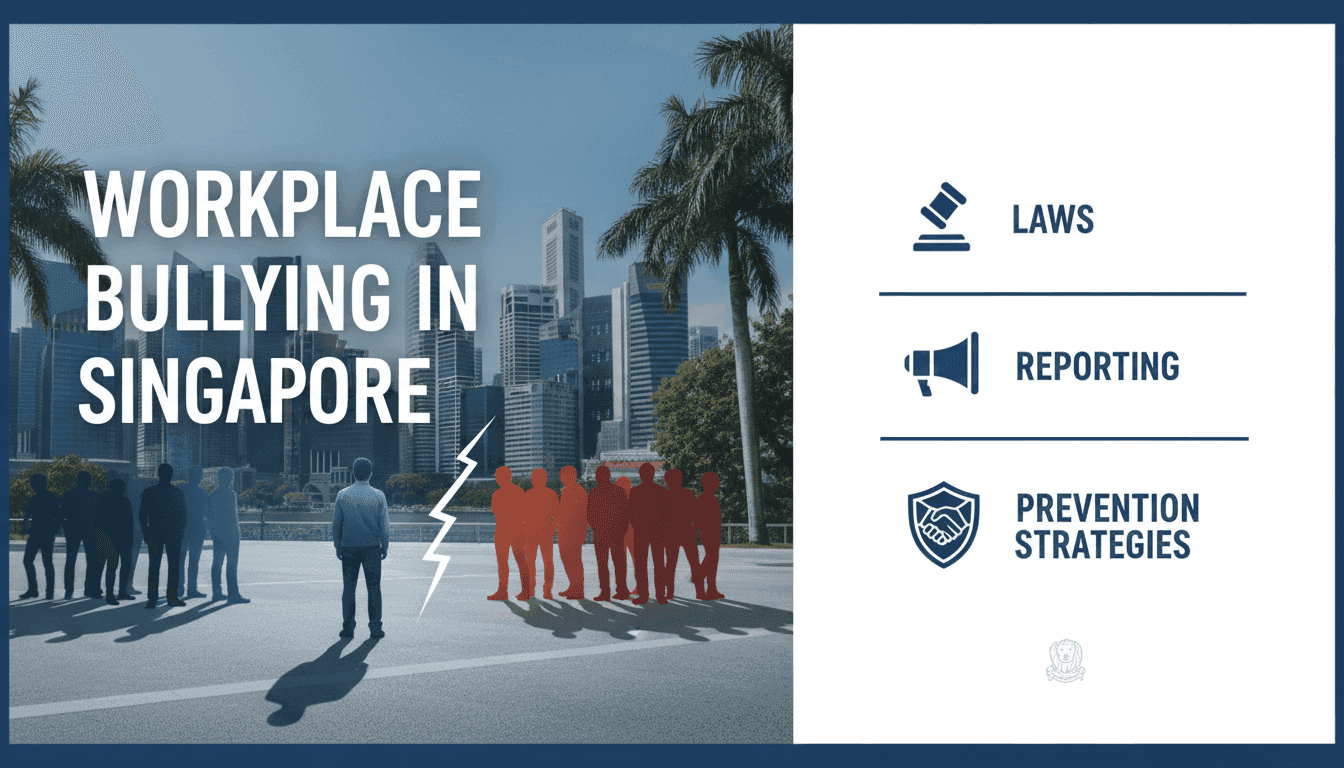
Table Of Contents
- What Is Workplace Bullying? Defining the Problem
- Is Workplace Bullying Illegal in Singapore?
- Key Laws and Frameworks That Protect Employees
- How to Report Workplace Bullying in Singapore
- The Psychological Impact on Employees and Organisations
- Prevention Strategies Every Organisation Should Implement
- How an Employee Assistance Program Can Help
- Conclusion
Workplace Bullying in Singapore: Laws, Reporting & Prevention Strategies
Workplace bullying is more common than most organisations want to admit. A persistent pattern of belittling remarks from a supervisor, deliberate exclusion from team discussions, or repeated public humiliation — these behaviours chip away at an employee's confidence, health, and productivity far more deeply than a single conflict ever could. In Singapore, where workplace culture is evolving rapidly alongside national mental health awareness efforts, understanding what constitutes workplace bullying, what legal protections exist, and how to respond effectively has never been more important.
This guide is designed for HR professionals, business leaders, and employees who want a clear, practical picture of how workplace bullying is defined and addressed in Singapore. We cover the legal landscape, step-by-step reporting channels, the psychological toll bullying takes on individuals and teams, and the evidence-based prevention strategies that forward-thinking organisations are already implementing.
What Is Workplace Bullying? Defining the Problem {#what-is-workplace-bullying}
Workplace bullying refers to repeated, unreasonable behaviour directed at an employee or group of employees that creates a risk to health and safety. The key word here is repeated: a single rude comment, while unpleasant, does not typically constitute bullying. It is the persistent, targeted nature of the behaviour that distinguishes bullying from ordinary workplace friction or legitimate performance management.
Common forms of workplace bullying in Singapore include:
- Verbal abuse — shouting, insults, sarcasm, or demeaning language directed at an employee
- Psychological manipulation — spreading rumours, undermining someone's work, or withholding information to set them up for failure
- Social exclusion — deliberately leaving someone out of meetings, conversations, or team activities
- Unreasonable work demands — assigning impossible workloads or deadlines with the intent to overwhelm
- Cyberbullying — harassing messages, humiliating posts, or unwanted contact through digital channels
It is equally important to distinguish what bullying is not. Managers who provide constructive feedback, set performance targets, or restructure team responsibilities are exercising legitimate management functions — even when employees find these actions uncomfortable. The distinction lies in the intent, consistency, and reasonableness of the behaviour.
Is Workplace Bullying Illegal in Singapore? {#is-workplace-bullying-illegal}
Singapore does not yet have a single, dedicated anti-bullying statute that mirrors legislation in countries like Australia or Canada. However, this does not mean employees are without legal recourse. Several overlapping laws and frameworks provide meaningful protection against workplace bullying and harassment.
The most important development in recent years is the Workplace Fairness Legislation (WFL), which Singapore is progressively introducing to strengthen protections against discriminatory and unfair employment practices. Alongside this, the tripartite ecosystem — comprising the Ministry of Manpower (MOM), the National Trades Union Congress (NTUC), and the Singapore National Employers Federation (SNEF) — continues to set standards through advisory frameworks and enforceable guidelines.
Key Laws and Frameworks That Protect Employees {#key-laws-and-frameworks}
Understanding the legal landscape is essential for both employers designing workplace policies and employees considering their options.
The Protection from Harassment Act (POHA) 2014
The Protection from Harassment Act (POHA) is Singapore's primary legislative tool for addressing harassment, including conduct that occurs in the workplace. Under POHA, behaviours such as threatening, abusive, or insulting communication — whether verbal, written, or electronic — are unlawful. Victims can apply to the Courts for Protection Orders, and in serious cases, perpetrators may face criminal penalties including fines and imprisonment. The 2021 amendments to POHA strengthened its provisions significantly, including the establishment of the Protection from Harassment Court (PHC), which provides a dedicated, faster pathway for victims to seek relief.
The Employment Act and Tripartite Guidelines
While the Employment Act primarily governs terms of employment, it establishes baseline standards that indirectly protect employees from exploitative treatment. More directly relevant are the Tripartite Guidelines on Fair Employment Practices issued by the Tripartite Alliance for Fair and Progressive Employment Practices (TAFEP). These guidelines require employers to maintain a respectful workplace and provide clear grievance-handling processes. Non-compliance can result in consequences including restrictions on work pass applications.
Workplace Safety and Health Act (WSHA)
The Workplace Safety and Health Act places a legal duty on employers to ensure the safety, health, and welfare of employees as far as reasonably practicable. Psychological harm caused by sustained bullying is increasingly recognised as a workplace health risk under this framework, meaning employers who ignore or enable bullying may be found to have breached their duty of care.
Workplace Fairness Legislation (WFL)
Singapore's upcoming Workplace Fairness Legislation will introduce mandatory requirements for employers to implement grievance-handling processes and prohibit retaliation against employees who raise discrimination or harassment complaints. When fully enacted, the WFL will represent the most significant legislative step forward for Singapore employees facing workplace misconduct.
How to Report Workplace Bullying in Singapore {#how-to-report}
If you are experiencing workplace bullying, knowing the correct reporting channels can make the difference between a situation that is resolved and one that escalates. Here is a practical step-by-step approach:
-
Document everything — Keep a detailed record of every incident, including dates, times, locations, witnesses, and the specific behaviour. Save emails, messages, and any written communication that supports your account. Documentation is the foundation of any formal complaint.
-
Report internally first — Most organisations have a formal grievance process. Report the bullying to your HR department or a trusted manager who is not involved in the situation. Submit your complaint in writing and request an acknowledgement. Internal resolution is often the fastest and least adversarial path.
-
Approach TAFEP — If your employer fails to act on your complaint or if the internal process is compromised, you can report the matter to TAFEP (Tripartite Alliance for Fair and Progressive Employment Practices). TAFEP investigates workplace discrimination and harassment complaints and can engage the employer on your behalf.
-
File a complaint with MOM — For employment-related grievances, employees can approach the Ministry of Manpower (MOM) through its Employment Standards Advisory (ESA) or lodge a complaint via the Employment Claims Tribunals (ECT) if the bullying has led to constructive dismissal or breach of employment contract.
-
Seek a Protection Order under POHA — If the bullying involves harassment, threats, or abusive communication, you may apply to the Protection from Harassment Court for a Protection Order or Expedited Protection Order. Legal aid is available for those who qualify.
-
Access external support — Reporting can be emotionally taxing. Engaging a counsellor or your organisation's Employee Assistance Program (EAP) during this process provides psychological support and helps you make informed decisions under pressure.
The Psychological Impact on Employees and Organisations {#psychological-impact}
The cost of workplace bullying extends far beyond the individual targeted. Research consistently shows that employees who experience bullying suffer elevated rates of anxiety, depression, burnout, and post-traumatic stress. Sleep disturbances, physical health complaints, and a loss of professional confidence frequently follow. Left unaddressed, these symptoms can become chronic, requiring prolonged psychological support and sometimes resulting in long-term absence from work.
For organisations, the consequences are equally serious. Teams that witness bullying — even without being direct targets — experience reduced trust, lower morale, and diminished psychological safety. People stop speaking up, innovation stalls, and collaboration deteriorates. Studies on organisational behaviour indicate that workplaces with unaddressed bullying suffer measurable drops in productivity, higher absenteeism, and significantly elevated staff turnover. The reputational damage of being known as a toxic workplace can also affect recruitment, client relationships, and employer branding for years.
This is why workplace bullying must be framed not just as a people problem but as a business risk that demands strategic attention. Organisations that invest in a psychologically safe culture are not simply being kind — they are protecting their most valuable asset and their bottom line.
Prevention Strategies Every Organisation Should Implement {#prevention-strategies}
Preventing workplace bullying requires more than a written policy gathering dust in the employee handbook. Effective prevention is systemic, proactive, and embedded into the daily culture of an organisation.
Establish a Clear Anti-Bullying Policy
Every organisation needs a written policy that defines bullying, outlines unacceptable behaviours, explains reporting procedures, and specifies consequences for perpetrators. The policy should be communicated clearly during onboarding and revisited regularly. Critically, it must apply to everyone in the organisation — including senior leadership.
Train Leaders and Managers
Managers are often the first to observe signs of bullying, and they are also, at times, the source of it. Leadership training that covers psychological safety, respectful communication, and conflict resolution equips managers to model positive behaviour and intervene early when problems arise. Training that develops emotional intelligence and self-awareness is particularly effective in shifting the relational dynamics that allow bullying to persist.
Build Psychological Safety
Psychological safety — the belief that one can speak up, raise concerns, or make mistakes without fear of punishment — is the single most powerful cultural antidote to bullying. Leaders build it through consistent behaviour: acknowledging errors openly, responding to concerns without defensiveness, and actively soliciting diverse perspectives. Regular pulse surveys and anonymous feedback channels give employees a structured way to signal problems before they escalate.
Implement Structured Grievance Mechanisms
Employees need to trust that if they report bullying, their complaint will be handled fairly, confidentially, and without retaliation. This requires a grievance process with clear timelines, impartial investigators, and transparent outcomes. Organisations should also conduct post-complaint follow-ups to ensure that the reporting employee has not faced any form of retaliation.
Leverage Data and Early Intervention
Regular employee engagement surveys, turnover analytics, and absenteeism data often contain early warning signals of bullying hotspots — specific teams, departments, or managers where something is not right. Organisations that track and act on these signals can intervene before a bullying situation becomes entrenched or reaches a legal threshold.
How an Employee Assistance Program Can Help {#how-eap-can-help}
One of the most effective tools available to Singapore organisations navigating workplace bullying is a professionally managed Employee Assistance Program (EAP). An EAP provides confidential counselling, psychological support, and practical guidance to employees experiencing workplace stress, harassment, or burnout — without requiring them to disclose the matter internally before they are ready.
At iGrowFit, our EAP services are built on over 15 years of experience supporting more than 450 organisations across Singapore and the region. Our multi-disciplinary team of psychologists, counsellors, and coaches works with both individuals and leadership teams to address the root causes of workplace dysfunction — not just the symptoms. Through our ConPACT framework (Consultancy, Profiling, Assessments, Coaching, and Training), we help organisations build the psychological capital and cultural foundations that make bullying far less likely to take hold in the first place.
For employees, our EAP provides a safe, confidential space to process difficult experiences, understand available options, and develop resilience. For HR leaders and business owners, we offer organisational diagnostics, bespoke training programmes, and leadership development solutions that align people strategy with business outcomes. Because a workplace where people feel safe, valued, and respected is not just a healthier workplace — it is a more productive and competitive one.
Conclusion {#conclusion}
Workplace bullying in Singapore is a serious issue with real consequences for individual wellbeing and organisational performance. While Singapore's legal framework continues to evolve — with POHA, TAFEP guidelines, and the incoming Workplace Fairness Legislation providing meaningful protections — the most sustainable defence against workplace bullying is a strong, psychologically safe organisational culture. That culture is built through deliberate leadership, clear policies, consistent accountability, and the right support systems.
Whether you are an employee navigating a difficult situation or an HR leader working to strengthen your organisation's approach, you do not have to face this alone. The right expertise and the right support can make all the difference.
Ready to build a safer, healthier workplace?
Speak with an iGrowFit EAP specialist today. Our team is here to support your employees and help your organisation create a culture where everyone can thrive.
Meta Title: Workplace Bullying in Singapore: Laws, Reporting & Prevention Strategies
Meta Description: Learn how Singapore's laws address workplace bullying, how to report incidents through MOM and TAFEP, and the prevention strategies that protect employees and businesses.